TLDR: Dyscalculia is a neurodevelopmental learning disability that makes it persistently hard for children to understand numbers, learn math facts, and perform calculations — even with good teaching and normal intelligence. It affects roughly 3–7% of the population (about as common as dyslexia), has a basis in how the brain processes numerical information, and often co-occurs with ADHD and dyslexia. Early identification and targeted, multi-sensory intervention can make a meaningful difference. Dyscalculia is not a reflection of effort or intelligence — it's a different kind of brain wiring that needs a different kind of support.
When Math Never Seems to "Click"
You've tried flashcards, apps, after-school tutoring, and kitchen-table practice sessions. Your child is bright, curious, and capable in so many areas — but when it comes to math, it's like starting from zero every single day.
If this sounds familiar, you're not alone. And there's a good chance your child isn't simply "bad at math." They may have dyscalculia - a specific learning disability that affects how the brain understands and works with numbers.
Understanding what dyscalculia actually is - what causes it, how it shows up, and what you can do about it - is the first step toward getting your child the right kind of help.
For the bigger picture, see our overview of neurodivergent math learning strategies that actually work.
So, What Exactly Is Dyscalculia?
Dyscalculia (pronounced dis-kal-KYOO-lee-uh) is a specific learning disability that affects a person's ability to understand numbers, learn arithmetic facts, and perform mathematical calculations. It is formally recognised in both the ICD-10 (code F81.2) and the DSM-5 as a type of Specific Learning Disorder with impairment in mathematics.
Think of it as the mathematical equivalent of dyslexia. Just as dyslexia disrupts the brain's ability to process written language, dyscalculia disrupts the brain's ability to process numerical information. According to clinical guidelines published in Deutsches Ärzteblatt International, individuals with dyscalculia show marked and persistent problems applying basic arithmetic methods and recalling math facts — and these difficulties are not explained by low intelligence or poor schooling (Haberstroh & Schulte-Körne, 2019).
This is a key point worth repeating: dyscalculia is not about being lazy, unmotivated, or unintelligent. It is a neurodevelopmental condition — rooted in how the brain is wired.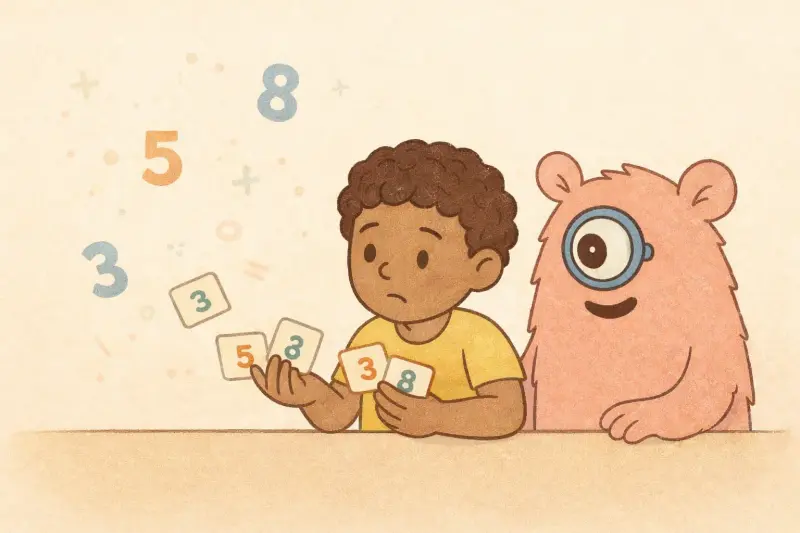
How Common Is Dyscalculia?
Population-based research consistently estimates that developmental dyscalculia affects between 3% and 7% of school-age children — a prevalence rate comparable to that of dyslexia and ADHD (Shalev, 2004). One large-scale study of over 3,000 eleven-year-olds found the prevalence of dyscalculia to be approximately 6.5%, with roughly equal numbers of boys and girls affected (Gross-Tsur, Manor, & Shalev, 1996).
Despite being just as common as dyslexia, dyscalculia receives significantly less attention — from researchers, schools, and policymakers alike. Many children go undiagnosed for years. If you've noticed your child is a strong reader and writer but consistently struggles with even basic math, this gap in awareness may be part of the reason no one has flagged it yet. (We explore this challenge in depth in our article on how schools miss dyscalculia in bright or verbal kids.)
What Causes Dyscalculia? The Brain Science
Dyscalculia is not caused by poor teaching or a lack of practice. Research in cognitive neuroscience points to differences in how the brain processes numerical information, particularly in a region called the intraparietal sulcus (IPS) — a part of the parietal lobe closely involved in comparing quantities, understanding number magnitude, and performing arithmetic.
A meta-analysis of neuroimaging studies published in Human Brain Mapping found that the most consistent brain-based difference in individuals with math learning difficulties was reduced activation in the right intraparietal sulcus. The study also identified atypical functioning in a broader network of regions involved in attention, working memory, and visual processing (Tablante et al., 2023).
In other words, dyscalculia appears to involve a fundamental difference in how the brain represents and manipulates number — not just in one spot, but across interconnected circuits that support mathematical thinking.
There is also evidence for a genetic component. Research shows that dyscalculia tends to run in families: one study found that 42% of children with dyscalculia had first-degree relatives with learning disabilities (Gross-Tsur, Manor, & Shalev, 1996). If you or your partner remember math being unusually hard growing up, that history may be relevant.
What Does Dyscalculia Look Like? Common Signs by Age
Dyscalculia looks different depending on a child's age, but there are some hallmark signs that tend to show up early and persist over time.
Preschool and Kindergarten (Ages 4–6)
Children may have trouble learning to count in sequence, connecting a number to the quantity it represents (e.g., understanding that "3" means three objects), or quickly recognising how many items are in a small group without counting — a skill researchers call subitizing. Difficulty with subitizing is one of the earliest markers of dyscalculia identified in research (Rapin, 2016).
See also our guide to what skip counting is and how to teach it.
Early Primary School (Ages 6–9)
This is often when dyscalculia becomes most visible. Children may rely heavily on finger-counting long after peers have moved on, struggle to learn basic addition and subtraction facts, confuse mathematical symbols (like + and ×), or have difficulty understanding concepts like "more than" and "less than." They may also have trouble reading analog clocks or understanding money.
The part–whole way of seeing numbers is the basis of number bonds. Children could struggle with this as well.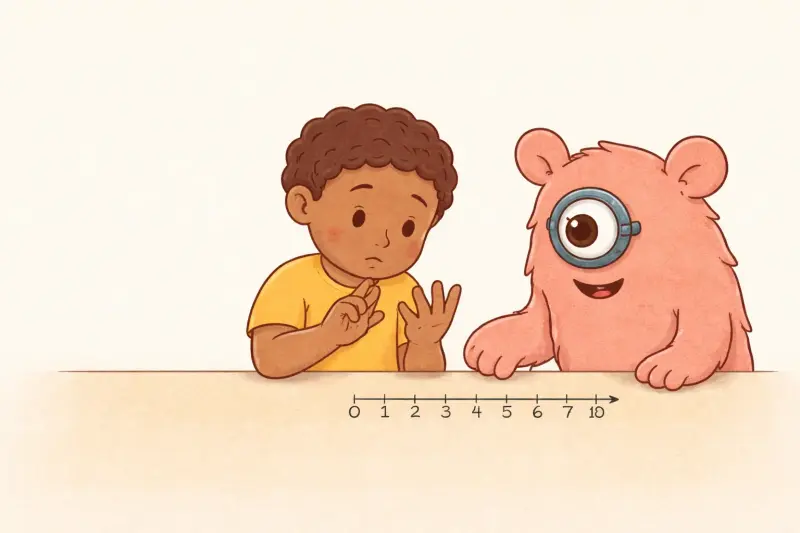
For a deeper look at early warning signs, check out our guide to spotting signs of dyscalculia in children.
Upper Primary and Beyond (Ages 9+)
Older children with dyscalculia may struggle with multi-step problems, have significant difficulty with multiplication tables, find word problems especially confusing, and show poor sense of time and direction. They may also develop math anxiety — an intense fear or avoidance of anything involving numbers.
Dyscalculia and Math Anxiety: A Vicious Cycle
One of the most painful aspects of dyscalculia is its emotional toll. When a child repeatedly fails at something their classmates seem to manage easily, the result is often frustration, shame, and eventually anxiety.
Clinical research confirms this pattern. A clinical practice guideline published in Deutsches Ärzteblatt International reports that children with unrecognised dyscalculia commonly develop both internalising symptoms (such as anxiety and depressed mood) and externalising symptoms (such as agitation and aggression), with prevalence rates ranging from 10% to 40% (Haberstroh & Schulte-Körne, 2019).
The anxiety itself then becomes another barrier to learning. A child who panics at the sight of a worksheet is not in a cognitive state where new learning can happen. Breaking this cycle requires addressing both the math skill gaps and the emotional experience around math.
The two are easy to confuse — see dyscalculia vs math anxiety for how to tell them apart.
Dyscalculia Often Doesn't Come Alone: Common Co-occurring Conditions
Dyscalculia frequently overlaps with other neurodevelopmental conditions. According to the same clinical guidelines, the most common co-occurring conditions include:
Dyslexia - approximately 30–40% of children with dyscalculia also have a reading or spelling disorder. The odds ratio for this comorbidity is remarkably high at 12.25.
(See dyscalculia vs dyslexia for how the two overlap and differ.)
ADHD — between 10% and 20% of children with dyscalculia also show attention difficulties. Working memory and executive function challenges associated with ADHD can amplify mathematical struggles.
(More on this overlap in can ADHD and dyscalculia occur together?)
Anxiety and mood difficulties — math anxiety, test anxiety, and even school avoidance are commonly reported.
This is why a thorough evaluation matters. If your child has dyscalculia, it's worth screening for these related conditions too — and vice versa. A child diagnosed with ADHD who still struggles with math despite medication and behavioural support may benefit from a specific dyscalculia assessment.
How Is Dyscalculia Diagnosed?
There is no single blood test or brain scan for dyscalculia. Diagnosis typically involves a comprehensive evaluation that includes standardised math assessments, cognitive testing (including working memory and processing speed), a review of educational history, and ruling out other explanations such as poor instruction, anxiety, or intellectual disability.
According to evidence-based clinical guidelines, the diagnosis should only be made when a person shows below-average mathematical performance viewed in the context of their individual history, test results, clinical examination, and broader psychosocial assessment (Haberstroh & Schulte-Körne, 2019).
In many countries, educational psychologists, neuropsychologists, or specialist paediatricians can conduct this kind of evaluation. If you're unsure where to start, your child's school or paediatrician can usually point you toward the right professional.
What Helps? Evidence-Based Approaches to Support
The good news is that targeted intervention makes a real difference. A meta-analysis of treatment studies found an overall effect size of 0.52 for dyscalculia interventions — a moderate and meaningful improvement (Haberstroh & Schulte-Körne, 2019).
Here's what the research tells us works best:
Start Early
Intervention is most effective when it begins in the early primary school years. The longer dyscalculia goes unaddressed, the wider the gap grows — and the harder it becomes to close.
Focus on Specific Math Skills
Broad tutoring that covers everything at once tends to be less effective than targeted work on the specific areas where a child struggles. This might mean intensive work on number sense, basic fact fluency, or place value — depending on the child's individual profile. Building strong number sense is foundational for children with dyscalculia.
Use Multi-Sensory and Concrete Approaches
Children with dyscalculia benefit enormously from hands-on materials (manipulatives, counters, number lines) and visual representations that make abstract mathematical concepts tangible. The clinical literature consistently recommends approaches grounded in the Concrete–Representational–Abstract (CRA) framework, which starts with physical objects and gradually moves toward symbolic notation (Kaufmann & von Aster, 2012). Apps like Monster Math focus on visual manipulatives and can be useful for kids with Dyscalculia.
Our complete guide to the CRA method in math walks through how to apply each stage at home and in the classroom.
Work One-on-One Where Possible
Research suggests that individualised intervention delivered by trained specialists produces the strongest outcomes. Group settings can also work, but the key is that instruction is tailored to the child's specific skill profile — not a one-size-fits-all programme.
Address the Emotional Side
Any effective plan for a child with dyscalculia needs to account for their emotional relationship with math. Building confidence, reducing shame, and creating low-pressure practice environments are just as important as the math content itself.
What Dyscalculia Is NOT
It can be helpful to clear up some common misconceptions:
Dyscalculia is not "just being bad at math." Many children find math hard at some point. Dyscalculia is different — it's persistent, severe, and doesn't resolve with standard instruction.
It's not caused by laziness or lack of effort. Children with dyscalculia are often trying harder than their peers, not less.
It doesn't mean low intelligence. Dyscalculia occurs across the full range of intellectual ability. Many children with dyscalculia are exceptionally bright in other areas.
It won't go away on its own. Without specific support, dyscalculia persists into adolescence and adulthood (Shalev, 2004).
FAQs About Dyscalculia
Q: What is dyscalculia in simple terms?
A: Dyscalculia is a learning disability that makes it unusually difficult to understand numbers, learn math facts, and perform calculations. It's sometimes described as "dyslexia for math" and is caused by differences in brain wiring, not by a lack of effort or intelligence.
Q: How common is dyscalculia in children?
A: Research estimates that 3–7% of children have dyscalculia, making it roughly as common as dyslexia. However, it is diagnosed far less often because awareness among parents and educators remains low.
Q: Is dyscalculia the same as being bad at math?
A: No. Many children find math challenging at times, but dyscalculia involves severe, persistent difficulties that don't improve with normal teaching. It is a recognised neurodevelopmental condition, not a matter of effort or attitude.
Q: Can a child have both dyscalculia and ADHD?
A: Yes. Research shows that about 10–20% of children with dyscalculia also have ADHD. The working memory and attention challenges associated with ADHD can make math even harder for these children.
Q: Can a child have both dyscalculia and dyslexia?
A: Absolutely. Studies indicate that roughly 30–40% of children with dyscalculia also have dyslexia. These children are at particularly high risk for academic struggles and benefit from support that addresses both conditions.
Q: How do I know if my child has dyscalculia or is just struggling with math?
A: Key indicators include: the difficulties are persistent (they don't go away with extra help), they go back to the very basics of number understanding, and they are out of step with how the child performs in other subjects. A formal evaluation by an educational psychologist or neuropsychologist can provide a clear answer.
Q: Does dyscalculia go away with age?
A: Dyscalculia is a lifelong condition. However, with the right support and strategies, children with dyscalculia can learn to manage their difficulties effectively and build meaningful math skills.
Q: What is the best way to help a child with dyscalculia?
A: Early, targeted intervention focused on specific math skill gaps is most effective. Multi-sensory teaching methods, concrete manipulatives, and one-on-one instruction all show strong results. Equally important is addressing math anxiety and building the child's confidence.
Q: Is dyscalculia officially recognised as a disability?
A: Yes. Dyscalculia is recognised in both the DSM-5 (as a Specific Learning Disorder with impairment in mathematics) and the ICD-10/ICD-11. In many countries, children with dyscalculia are entitled to accommodations and support in school.
Q: What part of the brain is affected in dyscalculia?
A: Research consistently points to the intraparietal sulcus (IPS) in the parietal lobe as a key area. This brain region is involved in understanding numerical magnitude and performing mental arithmetic, and it tends to function differently in individuals with dyscalculia.
You're Already Doing the Right Thing
If you're reading this article, you're already researching and advocating for your child — and that matters more than you might think. Understanding what dyscalculia is gives you the language to talk to teachers, request evaluations, and seek out the right kind of help.
Your child isn't destined to be always bad at Math. Their brain just processes numbers differently. And with the right support, they absolutely can build a confident, capable relationship with math.
Monster Math is designed to meet neurodivergent kids where they are — with adaptive practice, game-based learning, and a focus on building number sense from the ground up. Try it now!
References
Haberstroh, S., & Schulte-Körne, G. (2019). The diagnosis and treatment of dyscalculia. Deutsches Ärzteblatt International, 116(7), 107–114. https://doi.org/10.3238/arztebl.2019.0107
Shalev, R. S. (2004). Developmental dyscalculia: Prevalence and prognosis. European Child & Adolescent Psychiatry, 13(Suppl 2), ii4–ii10. https://mathcognitionucsf.github.io/dyscalculia/shalev_prevalence.pdf
Gross-Tsur, V., Manor, O., & Shalev, R. S. (1996). Developmental dyscalculia: Prevalence and demographic features. Developmental Medicine & Child Neurology, 38(1), 25–33. https://doi.org/10.1111/j.1469-8749.1996.tb15029.x
Tablante, J., Krossa, L., Azimi, T., & Chen, L. (2023). Dysfunctions associated with the intraparietal sulcus and a distributed network in individuals with math learning difficulties: An ALE meta-analysis. Human Brain Mapping, 44(7), 2726–2740. https://doi.org/10.1002/hbm.26240
Kaufmann, L., & von Aster, M. (2012). The diagnosis and management of dyscalculia. Deutsches Ärzteblatt International, 109(45), 767–778. https://doi.org/10.3238/arztebl.2012.0767
Rapin, I. (2016). Dyscalculia and the calculating brain. Pediatric Neurology, 61, 11–20. https://doi.org/10.1016/j.pediatrneurol.2016.02.007
Cohen Kadosh, R., Cohen Kadosh, K., Schuhmann, T., Kaas, A., Goebel, R., Henik, A., & Sack, A. T. (2007). Virtual dyscalculia induced by parietal-lobe TMS impairs automatic magnitude processing. Current Biology, 17(8), 689–693. https://doi.org/10.1016/j.cub.2007.02.056
Butterworth, B., Varma, S., & Laurillard, D. (2011). Dyscalculia: From brain to education. Science, 332(6033), 1049–1053. https://www.researchgate.net/profile/Diana-Laurillard/publication/51169475_Dyscalculia_From_Brain_to_Education/links/0912f51156b56c9854000000/Dyscalculia-From-Brain-to-Education.pdf