TL;DR: Science apps can be transformative for neurodivergent kids - but only when they're designed the right way. The best ones offer no-pressure exploration, visual-first learning, predictable interfaces, and adaptive pacing. In this guide, we cover ten standout science apps for kids with ADHD, autism, dyslexia, and other learning differences, each chosen for how well they actually fit the way neurodivergent brains work.
If you have a neurodivergent child who goes deep on volcanoes, has memorised every dinosaur species by age six, or can't stop asking why the sky turns orange at sunset - you already know that curiosity is not the problem. The problem is finding the right tool to fan those flames without triggering overwhelm, frustration, or shutdown.
Science, it turns out, is one of the best subjects for neurodivergent learners. It rewards deep focus, pattern recognition, and intense curiosity - traits many kids with ADHD and autism bring in enormous supply. The apps below are our picks for 2026: a mix of well-loved tools and newer, smaller platforms doing genuinely creative work in this space.
You might also enjoy our guide on Best Online Math Programs for Neurodivergent Kids, where we apply the same neurodivergent-friendly lens to popular math platforms.
What Makes a Science App Neurodivergent-Friendly?
Not every "educational" app is genuinely inclusive. Many layer on timers, competitive leaderboards, and cluttered screens - all of which can derail neurodivergent learners before the science even starts. A 2025 systematic review in Frontiers in Education found that mobile devices and interactive technology significantly improve learning outcomes for students with autism and other disabilities - but only when the design of those tools supports rather than frustrates them.
A peer-reviewed study that analysed 21 empirical studies on digital technology in science education for students with disabilities found that increased motivation was the single biggest benefit of well-designed digital tools. Engagement is the gateway to learning - and engagement is design-dependent.
When evaluating any science app for your child, look for these:
No punitive timers or failure states - exploration should feel safe
Visual and hands-on interaction - not just walls of text
Calm, uncluttered design - minimal sensory overload
Self-paced progression - no rushing, no comparison to others
Predictable navigation - reduces anxiety for autistic learners in particular
The 10 Best Science Apps for Neurodivergent Kids
1. Toca Lab: Elements & Plants
Ages: 5-9
Toca Lab turns science into pure play. In Elements, kids discover all 118 elements of the periodic table by experimenting with lab tools - heating, cooling, spinning - with no instructions and no wrong answers. In Plants, they grow and crossbreed specimens to discover new species. Both apps are open-ended, deeply visual, and completely pressure-free.
Why it works for neurodivergent kids:
No "right answer" stress - everything is exploration
Highly visual and tactile interactions
Short, self-contained experiments suit shorter attention windows
This aligns with research showing that curiosity-driven, open-ended exploration supports intrinsic motivation and scientific thinking in children - with active, self-directed discovery shown to build deeper understanding than passive instruction.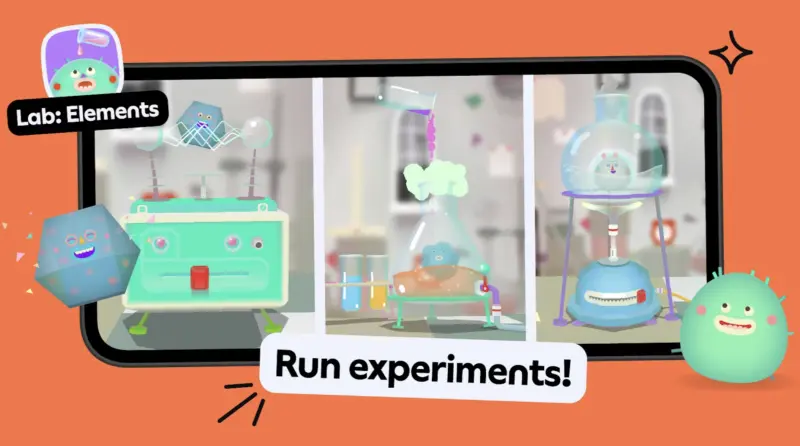
2. Thinkrolls Space
Ages: 4-10
Made by Avokiddo, a small independent game studio, Thinkrolls Space blends physics and puzzles in a way that genuinely feels like play. Kids experiment with gravity, force, and motion by guiding their character through increasingly inventive levels - each one building naturally on the last.
Why it works for neurodivergent kids:
Clear cause-and-effect relationships at every step
Problem-solving without heavy text instructions
Gentle, well-paced difficulty progression reduces frustration.
Studies suggest that structured problem-solving in game environments improves executive functioning skills - often an area of difficulty for kids with ADHD and autism - when the pacing is appropriately scaffolded.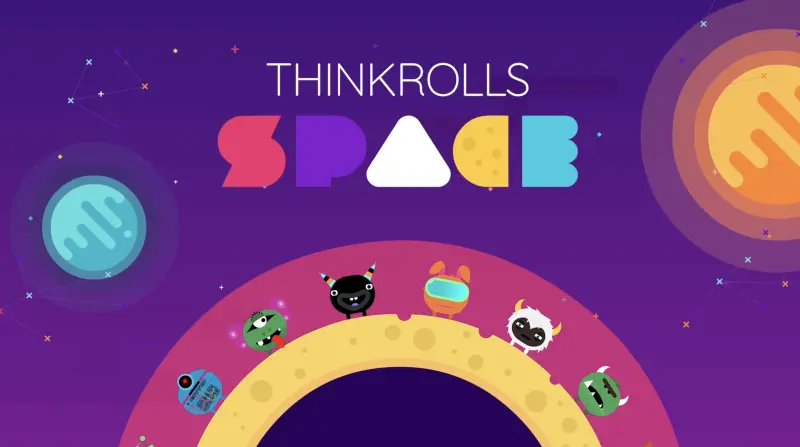
3. Tappity - Science for Kids
Ages: 4-10
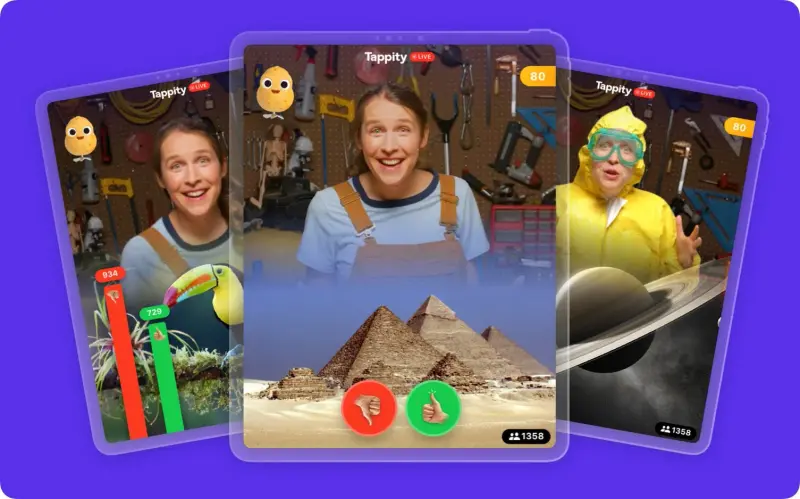
Tappity is an interactive science library for young kids. With over 500 science topics delivered through bite-sized video lessons and daily science challenges, it's designed to be engaging without being overwhelming. No timed tasks, no competitive scoring - each lesson is short enough to hold the attention of a child who finds long sessions difficult. The friendly presenter makes it feel like a one-on-one interaction rather than a passive screen experience.
This approach reflects well-established microlearning principles - research consistently shows that breaking content into short, focused bursts reduces cognitive overload and improves both retention and motivation, particularly for children who find sustained attention challenging.
Why it works for neurodivergent kids:
Bite-sized lessons suit shorter attention spans
Warm, presenter-led format feels personal rather than clinical
No pressure to "finish" - dip in and out freely.
4. Cretapedia: Science Learning
Ages: 5-12
Cretapedia covers biology, earth science, physics, space, and animals through animated episodes, interactive 3D models, and bite-sized activities - all in an ad-free environment. The 3D model explorer is a particular standout: kids can rotate, zoom, and inspect detailed models of everything from the human skeleton to rock formations. For visual-spatial learners - common in both ADHD and autism profiles - this is far more effective than static diagrams, and far more engaging.
Why it works for neurodivergent kids:
Interactive 3D models reward visual-spatial learners
Lessons are short and self-contained - no pressure to keep going
Minimal text dependency throughout
This matches findings that visual representations significantly enhance science comprehension for children with learning differences.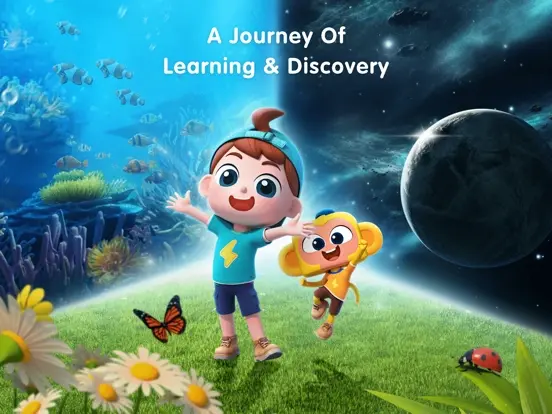
5. Kide Science
Ages: 3-8
Kide Science grew out of five years of academic research at the University of Helsinki. It delivers STEAM education through storytelling and hands-on inquiry - each lesson begins with a character from the fictional world of Supraland encountering a problem that children are invited to help solve. For neurodivergent children, this narrative framing is genuinely powerful: it provides context, reduces the pressure of direct instruction, and channels curiosity into structured exploration.
This approach is backed by peer-reviewed evidence: research on narrative formats in science communication found that story-based content is recalled twice as well as standard expository text - and that narratives consistently produce higher comprehension, engagement, and interest in science content compared to direct instruction.
Why it works for neurodivergent kids:
Story-led format reduces anxiety around direct instruction
Inquiry-based structure builds problem-solving gradually
Differentiation guidance built in for varied abilities
6. STEMWerkz
Ages: 5-12
STEMWerkz offers over 800 interactive science stories, videos, and games covering physical science, life science, and engineering design. What makes it especially suitable for neurodivergent learners is its multimodal approach: children can choose between a guided quest-style learning path, a free-exploration mode, or a city-building game that embeds science concepts in play. A peer-reviewed study found that offering choices and opportunities for self-regulation empowers neurodivergent learners to actively participate and sustain motivation - exactly the kind of flexibility STEMWerkz builds in from the start.
Why it works for neurodivergent kids:
Multiple modes - guided, free-explore, or game-based
Breadth of topics supports deep dives on favourite subjects
Calm visual design with no intrusive ads
7. STEM Buddies: Science for Kids
Ages: 4-9
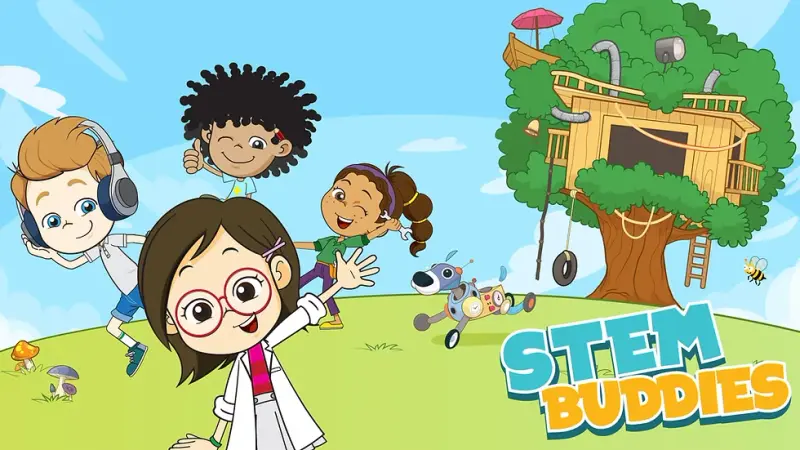
STEM Buddies introduces children to seven science topics - gravity, the water cycle, sound, flight, germs, muscles, and healthy food - through short animated stories following a group of characters who explore science from their treehouse. Each episode is self-contained, ad-free, and completely distraction-free. Critically, the app has been independently evaluated and certified by Education Alliance Finland, which specifically noted that the content is easy enough for children to navigate entirely on their own - no adult hand-holding required.
This story-based approach is backed by a growing body of evidence: a peer-reviewed study found that pairing storytelling with STEM content leads to more durable and retrievable memories compared to direct instruction - making narrative framing one of the most effective ways to help young children hold onto new science concepts.
Why it works for neurodivergent kids:
Narrative-led format lowers anxiety around direct instruction
Short, self-contained episodes with no pressure to keep going
Completely ad-free and distraction-free - no unexpected interruptions
Child-led navigation supports independent, autonomous learning
8. MEL Science
Ages: 8+
MEL Science combines physical experiment kits with an AR/VR app, letting kids visualise molecules, chemical reactions, and physics concepts in interactive 3D. Even without the physical kits, the app's standalone VR lessons cover topics like atomic structure, electricity, and states of matter in a way that makes the abstract genuinely tangible.
Why it works for neurodivergent kids:
Bridges concrete hands-on activity with abstract concept
3D and AR visuals support learners who struggle with abstract diagrams
Highly immersive - good for kids who need deep engagement to focus
This directly aligns with the Concrete-Representational-Abstract (CRA) framework, which research consistently identifies as an effective instructional approach for students with learning disabilities, particularly when bridging hands-on experience with abstract concept formation.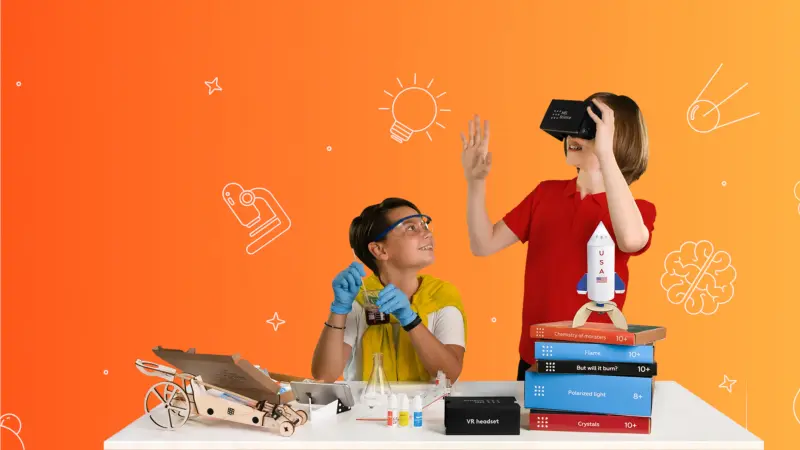
9. Seek by iNaturalist
Ages: 7+
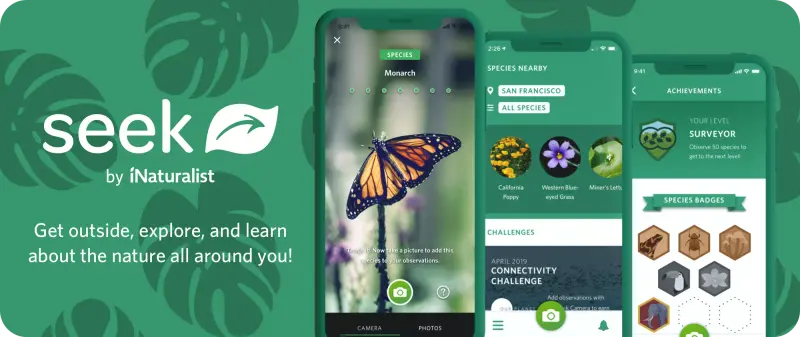
Developed by National Geographic and the California Academy of Sciences, Seek uses your phone's camera to identify real plants, animals, fungi, and insects in the wild - in real time. Point the camera at a leaf and it tells you the exact species. For children who are kinesthetic learners or who struggle to sit still, this is science you do while moving: outside, exploring, discovering. The badge system rewards curiosity over competition, and the real-world grounding taps into that hyperfocus energy so many neurodivergent kids have in abundance. It turns any walk into a biology field trip.
Why it works for neurodivergent kids:
Active and outdoors - great for kids who can't sit still
Immediate, satisfying feedback from the camera identifier
No failure states - every observation is a win
10. Khan Academy Kids
Ages: 2-7
Khan Academy Kids covers early science and nature through a completely judgment-free interface with no timers, no leaderboards, and no in-app purchases. Children learn entirely at their own pace through gentle stories and interactive games introducing animals, weather, and the natural world. Khan Academy Kids is consistently one of our top picks for PreK-age children with ADHD or autism because it treats emotional safety as a feature, not an afterthought.
Why it works for neurodivergent kids:
Zero competitive pressure - fully self-paced
Familiar, predictable interface reduces transition anxiety
Completely free, ad-free, and no in-app purchases
Tips for Getting the Most Out of Science Apps
Follow their interest, not the curriculum. If your child is fascinated by bugs, start with Seek. If it's chemistry, Toca Lab or MEL Science. Motivation is the bridge to learning, and neurodivergent kids often go deepest through the things they're already obsessed with.
Don't worry about finishing anything. Most of these apps are open-ended by design. A child who spends 20 minutes poking around Cretapedia's 3D models without "completing" a lesson is still building curiosity, vocabulary, and a relationship with science.
Look for the carry-over. The best sign that an app is working isn't a score - it's when your child starts talking about what they discovered, asks questions you can't answer, or connects something in the app to something they saw outside. That's genuine learning happening.
If your child's curiosity extends to numbers too, check out our piece on Neurodivergent Math Learning: Strategies That Actually Work - the same principles of visual, low-pressure, self-paced learning apply across all STEM subjects.
FAQs:
What makes a science app good for a child with ADHD?
The best science apps for ADHD kids avoid timers, punishing failure states, and cluttered screens. They offer short, self-contained interactions with immediate visual feedback and reward systems that celebrate curiosity rather than speed or accuracy. Open-ended apps like Toca Lab and Tappity work especially well because they let children follow their own interest without any external pressure.
Are science apps appropriate for autistic children?
Yes, and research increasingly supports their use. Many autistic children are strong visual learners who thrive in interactive, predictable digital environments. Apps with clean interfaces, no competitive elements, and calm audio are usually the best fit. Avoid apps with sudden loud sounds or unpredictable transitions. Cretapedia's 3D explorer and Kide Science's story-based approach are both particularly well-suited to autistic learners.
How much screen time is okay for neurodivergent kids?
Quality matters far more than quantity. Purposeful, interactive sessions of 15-30 minutes are more valuable than longer passive ones. Many neurodivergent children also benefit from clear routines around screen time - knowing when it starts and ends reduces transition anxiety. Always follow your child's cues: if they become dysregulated after app use, that's a signal to adjust.
My child only wants to use one app on repeat. Is that okay?
Absolutely. Returning to the same app is often how neurodivergent children achieve mastery and feel safe. Depth of engagement with one topic is more valuable than surface-level exposure to many. If your child is spending hours in Cretapedia's space module or identifying every species on every walk with Seek, that's real learning - and it's worth celebrating.
References:
Frontiers in Education (2025). A systematic review of the utility of assistive technologies for SEND students in schools. https://www.frontiersin.org/journals/education/articles/10.3389/feduc.2025.1523797/full
Springer / Education and Information Technologies (2022). Digital technology supports science education for students with disabilities: A systematic review. https://link.springer.com/article/10.1007/s10639-022-11317-9
JMIR Mental Health (2023). Effectiveness of Technology-Based Interventions for School-Age Children With ADHD: Meta-Analysis of Randomised Controlled Trials. https://mental.jmir.org/2023/1/e51459
Frolli, A. et al. (2023). Universal Design for Learning for Children with ADHD. Children (Basel), 10(8), 1350. https://pmc.ncbi.nlm.nih.gov/articles/PMC10453933/
Jirout, J. & Klahr, D. (2020). Supporting Early Scientific Thinking Through Curiosity. Frontiers in Psychology / PMC. https://pmc.ncbi.nlm.nih.gov/articles/PMC7419578/
Dahlstrom, M.F. (2014). Using narratives and storytelling to communicate science with nonexpert audiences. PNAS / PMC.https://pmc.ncbi.nlm.nih.gov/articles/PMC4183170/
Marcus, M., Solis, G., Sellars, S., & Haden, C.A. (2023). Promoting children's STEM learning at home through tinkering and storytelling. Frontiers in Psychology.https://pmc.ncbi.nlm.nih.gov/articles/PMC10189131/