Splashlearn is a fun K-5 math (and reading) program that combines gamified digital worksheets and mini-game experiences to make learning and practice fun for kids.
Unlike traditional digital worksheets like IXL - Splashlearn leans more towards gamification, while keeping the focus on learning. There are several mini games that make learning and practicing different concepts fun, in addition to the core gamified digital worksheet experience.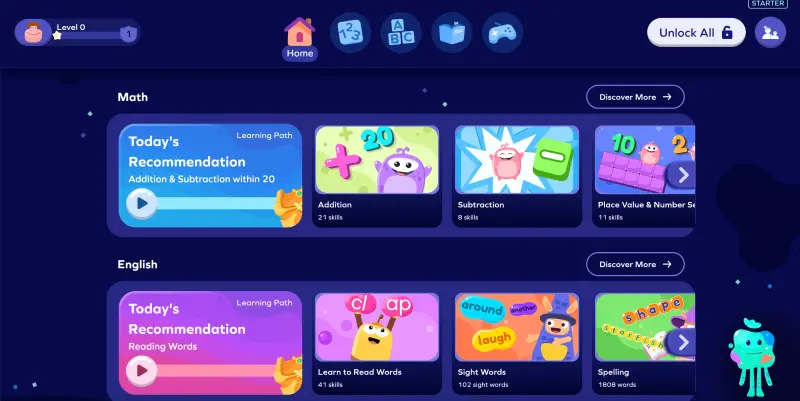
If your kids already love Splashlearn and you are looking for more such math apps - or somehow it's not working for them and you are looking at alternatives - you are in the right place.
Splashlearn gets a lot right - it's adaptive, it has a variety of different mini games and it's designed to be fun for kids. It also has some drawbacks though -
Questions can get repetitive at times.
There is little to no help when a child makes mistakes, which can lead to frustration, and even a lost learning opportunity.
Limited free content - 3 activities a day.
The mini-games are not connected to each other (other than skill progression), so it feels like big context switch from one screen to another.
To find out good alternatives, I spoke with parents, teachers, pedagogy experts and child specialists. Then I tested the suggestions that came up and prepared detailed notes comparing them - before finally making a list of these 5 best alternatives.
Best Splashlearn Alternatives: A Quick Snapshot
Monster Math – Best Splashlearn alternative for foundational math (ages 5–8)
Prodigy – Best for curriculum coverage and a richer Game-world (Grades 4+)
DragonBox – Best for deep, topic-specific math games
Funexpected Math – Best for preschoolers who enjoy mini-games
Math Tango - Another good game-based alternative for basic arithmetic practice.
How I Evaluated These Splashlearn Alternatives
We looked at each app through a important lenses -
Learning quality – Does the game build real understanding or just reward speed?
Curriculum coverage - what curriculum does this app cover?
Fun – Is the fun element supporting learning, or distracting from it? How fun is it actually for the kids?
Stress & pressure – Timers, streaks, penalties, and failure states
Age fit – Who is this actually good for?
Parent experience – Pricing, supervision, and peace of mind
With these criteria, this is what we found.
1. Monster Math (Best Splashlearn Alternative for Foundations)
If your child is between 5 and 8 years old and is still building core math foundations, Monster Math stands out as the strongest alternative to Splashlearn - especially if Splashlearn still feels like a digital worksheet to your kids, though gamified.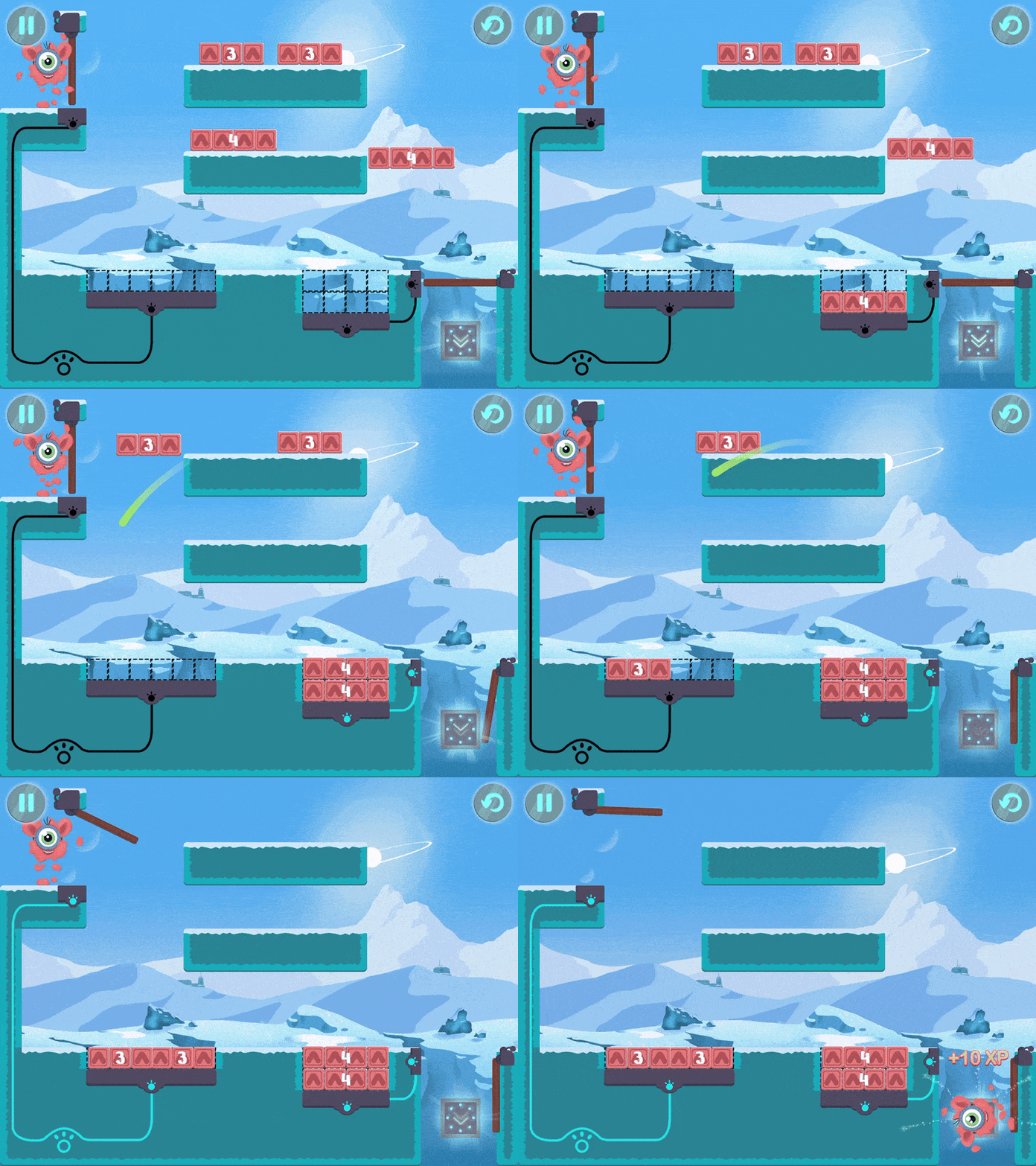
Monster Math focuses heavily on:
Number sense
Addition and subtraction strategies
Early multiplication and division strategies
Visual and conceptual understanding
Unlike Splashlearn, Monster Math is a real game with fun characters, a storyline and well-designed game mechanics. The game is deliberately designed to remove time pressure. Kids feel like they are solving a puzzler, but they are exposed to visual models and instinctively start grasping "this is how math works!"
Gameplay is tightly woven into learning - monsters don’t exist just as cosmetic rewards. Progress depends on understanding, not grinding.
What Monster Math Does Better Than Splashlearn
No Q&A format worksheets, even gamified ones. All learning and practice happens in actual games.
No timers or speed-based rewards
Stronger focus on math strategies, not memorization
Calmer pacing for neurodivergent learners
Clear progression from concrete to abstract thinking
You can use it for free forever, with the only limit being number of levels per day.
Designed to be neuroinclusive, especially for kids with ADHD or Autism.
It’s not trying to be a full curriculum for kids across many grades - and that’s exactly why it works so well for K-3 kids who need explicit strategy instruction rather than drilling.
Read a more detailed comparison between Monster Math and Splashlearn.
Best for: Ages 5–8, kids building foundations, children who get anxious with timed math, Neurodivergent kids.
Not ideal if: Your child prefers the worksheet format.
2. Prodigy (Full Curriculum Coverage with Richer Game world)
If your child is in middle school and they are already good at their math fundamentals - and especially love playing games - then Prodigy might be a Splashlearn alternative for you. Prodigy covers Math and English for grades K-8 but does so wrapped in a fun RPG game.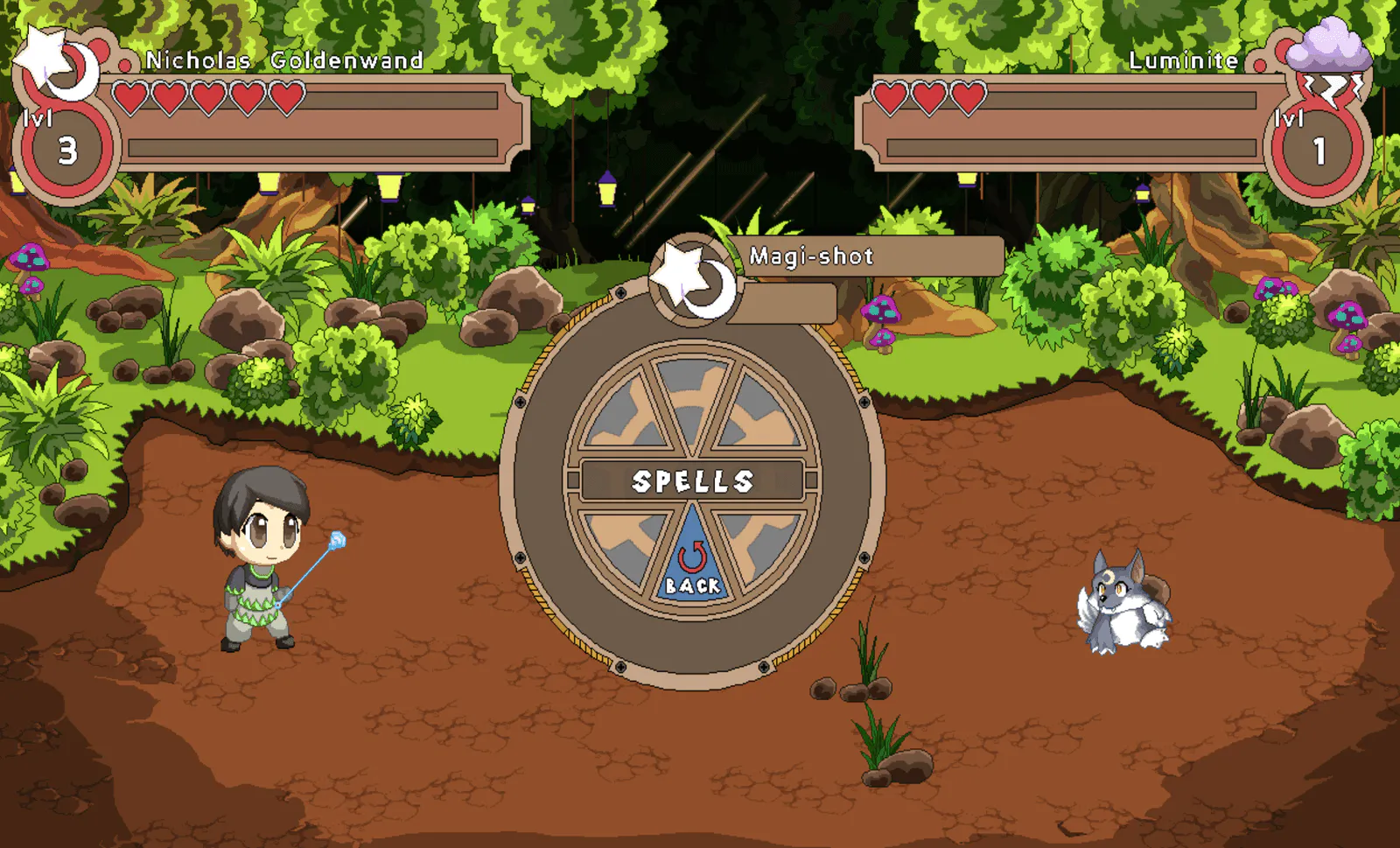
Not sure Prodigy is the one? I've put the best Prodigy alternatives head-to-head if you want to compare before committing.
In this game, the child plays a young wizard who collects monsters and then takes their help to fight other monsters (somewhat like Pokemon?!). As they do these battles, they need energy - which they can earn by doing more math questions.
What Prodigy Does Better Than Splashlearn
A full-fledged game - rather than many disparate experiences tied together, the prodigy game is one single, coherent game (with distinct characters and fun gameplay) with many different aspects to it.
Covers more grades, especially upto Grade 8.
Social aspects to the game, where you can follow other friends and their progress if logged into the same game server.
The whole game can be played for free without much restrictions. (though the free version does prompt to get paid for "better rewards", which is somewhat manipulative).
Best for: Ages 8-14, kids already strong with foundations, children who love MMORPGs and computer games.
Not ideal if: Your child doesn't like games involving battles, they need more time on task.
3. DragonBox Apps (Best for Deep Conceptual Games)
DragonBox (now acquired by Kahoot) has some beautiful math games for kids.
Each DragonBox app focuses on a specific mathematical idea, such as:
Number sense
Geometry
Basic algebra
The games are well designed and deeply intuitive. Kids often learn complex ideas without realizing they’re doing math at all. Most also avoid the use of language, so that it's not a barrier to math learning.
What DragonBox Does Better Than Splashlearn
Deep conceptual visualization and play with core math ideas
Highly intuitive play mechanics that reduce reliance on text
No worksheets or Q&A formats
However, DragonBox is not a full curriculum replacement. Think of it more like a set of powerful learning tools rather than an all-in-one solution. "Dragonbox Skole" seems to cover this gap but is currently available only in limited regions (Norway, maybe Sweden) and for teachers only.
Best for: Conceptual understanding, enrichment, fun playful math experiences
Not ideal if: You want one app that covers the full curriculum and is available where you live.
4. Funexpected Math (Best for Preschoolers)
Funexpected Math is designed primarily for very young learners — typically ages 3 to 5. It offers fun mini-games that introduce different pre-K topics such as counting, shapes and patterns.
If Splashlearn feels far too advanced for your child, Funexpected can be a gentler entry point into math.
What Funexpected Math Does Better Than Splashlearn
Playful, non-intimidating introduction to early math concepts
Mini-games that feel like play, not school, more aligned with preschool experience.
No timed questions or performance stress
Spends more time with early concepts to build a strong foundation.
That said, school-going children often outgrow it quickly. There’s limited depth once basic concepts are mastered. Much more suited for preschoolers than elementary kids.
Best for: Ages 3–5, their first exposure to Math concepts.
Not ideal if: Your child is already comfortable with basic numbers, counting and is ready for arithmetic.
5. Math Tango (Second option for Math Facts practice)
Math Tango is a fun Math game that helps kids learn addition, subtraction, multiplication and division with fun mini games combined with mission-based, Monster-filled world building.
The game starts with an empty island which the kids have to fill with monsters and other objects - to get these monsters and objects as rewards, they have to play different mini games, which help them practice Math facts.
The games are fun and not really like worksheets - they are fun and the missions keep everything tied up into one cohesive experience. There is a separate world for addition/subtraction and a separate one for multiplication/division.
What Math Tango Does Better Than Splashlearn
Playful, fun mini games that seem better designed than the Splashlearn mini games.
Missions tie the whole experience together - the different mini games don't feel like disparate experiences.
No timed questions.
No Q&A format worksheets.
That said, the content can feel a bit limiting - the missions are limited and once you run out of them, it can feel a bit monotonous.
Best for: Ages 5-8, for practicing Math facts they already know.
Not ideal if: Your child needs more number sense development, then it might fall a bit short.
Final Thoughts: Which Splashlearn Alternative Is Right for You?
There’s no single “best” math app for every child - but there is a best fit depending on what your child needs right now.
If your child needs strong foundations without stress → Monster Math
If you want curriculum-aligned practice but with more fun and a real game - for higher grades → Prodigy
If you value deep conceptual learning for specific topics → DragonBox
If your child is preschool-age → Funexpected Math
If your child already loves Monster Math and wants more games to just practice math facts - Math Tango.
Splashlearn took digital worksheets to the next level from IXL - gamifying it and making it more fun. These alternatives take it further, placing fun right at the center and weaving pedagogy in-between the fun parts.