Boddle has become a popular choice for elementary math practice thanks to its cute characters and game-style rewards. For many kids, it’s fun. And for some, it’s a great starting point.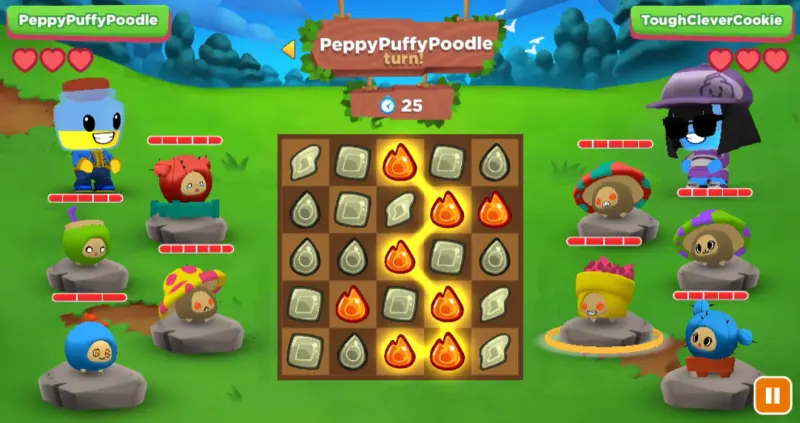
But after a while, many parents and teachers start wondering: Is my child actually understanding math - or just answering questions to earn rewards?
If you’re looking for Boddle alternatives, you’re probably hoping to find something that builds deeper understanding, reduces pressure, or simply feels more balanced.
Here are five strong alternatives to Boddle - along with how each one compares.
Best Boddle Alternatives at a Glance
Monster Math - Best for visual number sense and strategy-based fluency
DreamBox Learning - Best for structured, adaptive, curriculum-aligned instruction
ST Math - Best for visual, language-light problem solving
i-Ready Math - Best for assessment-driven classroom instruction
Prodigy - Best for immersive, RPG-style math gameplay
Why Look for a Boddle Alternative?
Boddle does a good job making math feel like a game. Avatars, rewards, and leveling systems can motivate kids who might otherwise resist practice.
But some families notice things like:
Heavy emphasis on speed
Limited visual explanation of concepts
Rewards sometimes overshadowing reasoning
A strong reward loop that can shift focus toward earning and customizing rather than understanding
Little visibility into how a child is thinking
Some dark patterns, such as consumable in-app purchases (such as buying in-game currency), which are not a good fit for kids apps.
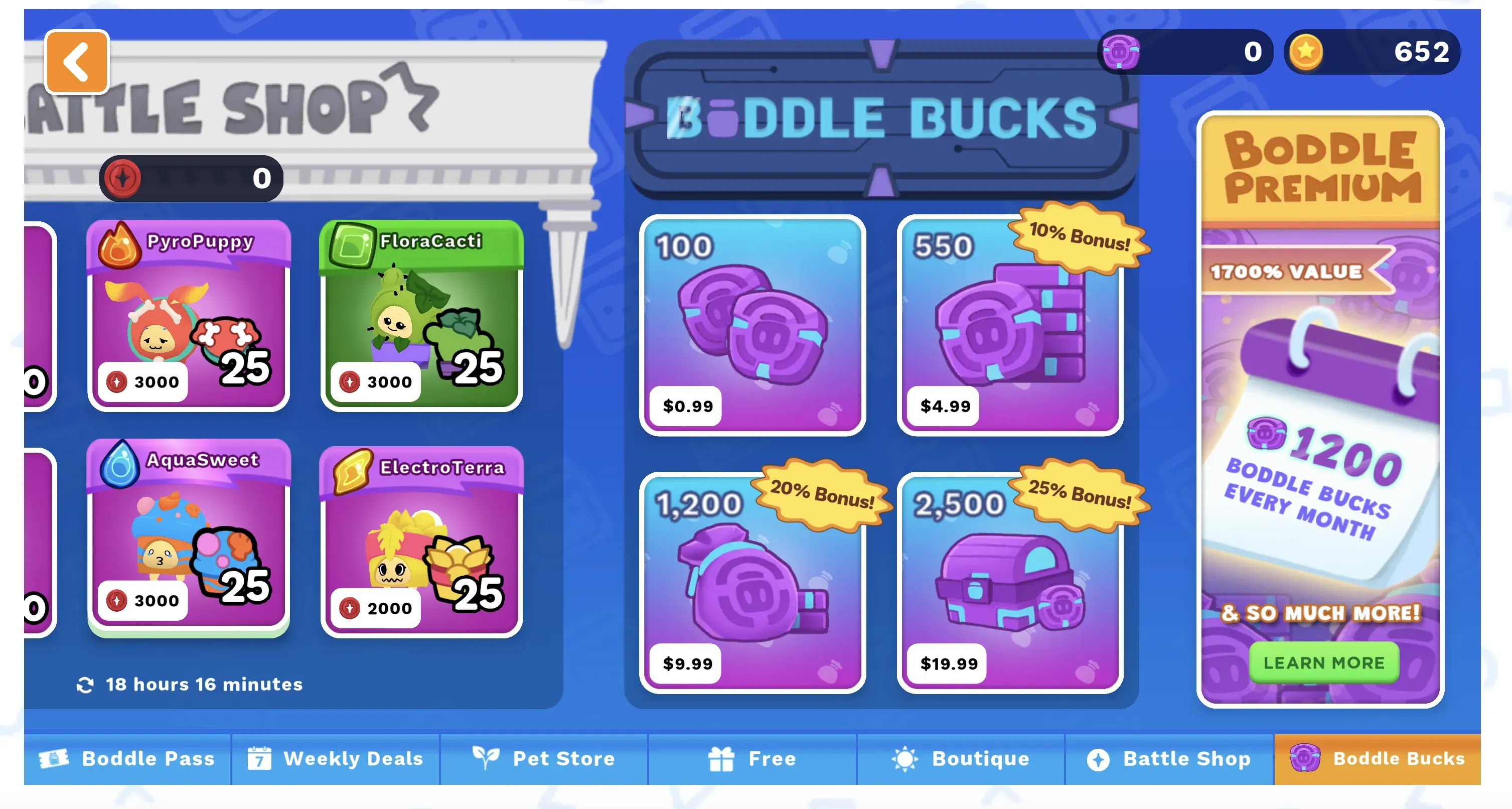
If these problems sound familiar, the apps below offer a different balance.
How I Evaluated These Alternatives
Instead of just listing “other math games,” I looked at each platform through a few practical lenses, and checked with my inhouse team of educational experts.
Conceptual depth - Does it build real number sense?
Visual support - Are ideas shown, not just asked?
Game balance - Is learning the game, or separate from it?
Pressure level - Timers, streaks, penalties?
Parent clarity - Can you actually see progress?
With that framework in mind, here’s what I found.
1) Monster Math (Best Overall Alternative to Boddle for K-3)
Monster Math was designed for families who want math to feel like a real game - but still build deep understanding. Instead of emphasizing speed or streaks, it focuses on visual strategies like number lines and ten-frames so kids understand why answers work.
Unlike heavily gamified drill apps, Monster Math includes characters, missions, and well-designed mechanics - but the learning isn’t layered on top of the game. It’s built directly into it. Kids feel like they’re solving puzzles inside a story world, not racing through questions just to unlock rewards.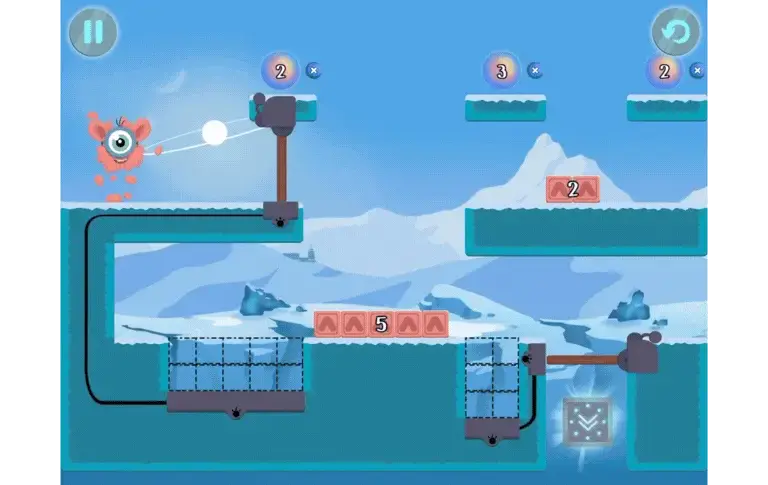
Time pressure is deliberately removed. Without countdown timers or streak anxiety, children slow down, think visually, and experiment with strategies. As they move through levels, they progress from concrete visual models toward more abstract thinking - often without even realizing they’re building real number sense.
How it compares to Boddle
No time pressure or streak penalties
Encourages strategy application
Clear progression from concrete to abstract thinking
Gameplay is directly tied to reasoning, not just answering
Where Boddle leans heavily on gamified motivation, Monster Math keeps the game tightly connected to the math itself.
How it performs on our criteria
Conceptual depth: Strong - builds strategy and number relationships.
Visual support: Excellent - representations are central.
Game balance: Very good - gameplay is learning, not a separate layer.
Pressure level: Low - no timers or speed scoring.
Parent clarity: Strong - skill-based progress tracking.
Best for: Kids in Grades 1-3 who need confidence, visual structure, and strategy-first fluency.
2) DreamBox Learning
DreamBox Learning is one of the most widely used adaptive math platforms in schools. Its strength lies in how it adapts lessons based on patterns in student responses - not just whether an answer is correct or incorrect.
What makes DreamBox feel different from more heavily gamified platforms is that it prioritizes interactive, visual problem solving over reward-based gameplay. The math experience itself is the core activity, rather than something students complete to unlock unrelated game features.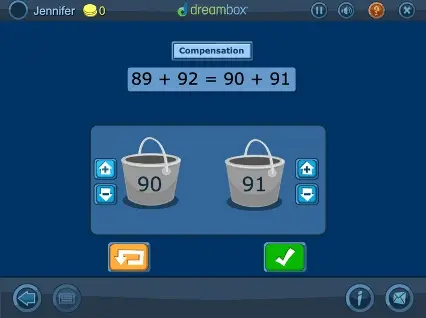
How it compares to Boddle
Less reward-driven and more instruction-focused
More curriculum-aligned
Feels more structured and “school-like” than game-like
Typically stronger teacher-facing tools and reports
If Boddle feels too game-heavy, DreamBox shifts the balance toward structured learning.
How it performs on our criteria
Conceptual depth: Good - lessons build gradually and adapt to how students respond.
Visual support: Moderate - visual models appear within lessons, though not always as the main focus.
Game balance: Instruction-first - some kids love this, others miss the playfulness.
Pressure level: Generally low - usually not built around speed or streaks.
Parent clarity: Moderate - strongest reporting is often in school contexts.
Best for: Classroom-aligned learning where you want a structured adaptive path and reporting.
Note that Dreambox Math is paid-only - they do have a 14-day free trial for families but they do not have a free tier, like Boddle, Prodigy or Monser Math.
3) ST Math
ST Math takes a unique approach: it teaches math almost entirely without words. Instead, students solve puzzles using visual-spatial reasoning.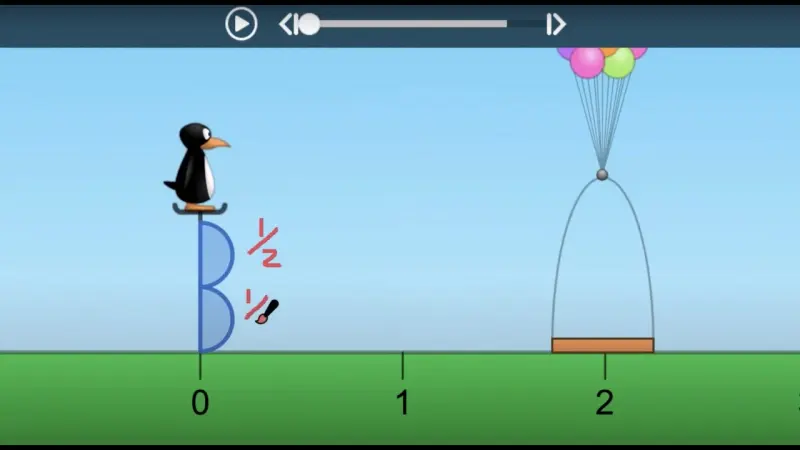
In ST Math, students solve visual puzzles by moving objects, adjusting quantities, and testing patterns until the system responds correctly. There are almost no word problems or text instructions. Instead of explaining procedures, the app lets students discover relationships visually, with puzzles gradually increasing in complexity as understanding develops.
How it compares to Boddle
Minimal text, narration, and instructions
No avatar economy or “earn-to-play” reward loop
Puzzle-first learning rather than question-first practice
Typically feels calmer and less distracting than gamified apps
If your child gets overwhelmed by word problems or distracted by reward systems, ST Math can feel refreshingly focused.
How it performs on our criteria
Conceptual depth: Strong - puzzles require reasoning, not recall.
Visual support: Excellent - the entire experience is visual.
Game balance: High learning integration - the puzzle is the lesson.
Pressure level: Low - not built around speed incentives.
Parent clarity: Moderate - it can be harder to see exactly what went wrong without teacher tools.
Best for: Visual learners, language-sensitive learners, and kids who benefit from non-verbal problem solving.
4) i-Ready Math
i-Ready Math is widely used in U.S. school districts as a diagnostic and instructional platform. It begins with an adaptive assessment that identifies specific skill gaps and strengths, then generates a personalized sequence of lessons aligned to grade-level standards.
Unlike Boddle’s open-ended, game-centered format, i-Ready follows a structured learning path. Students work through scaffolded lessons designed to target specific skills, and their progress is regularly reassessed to adjust instruction. The experience feels more like guided digital instruction than a traditional math game.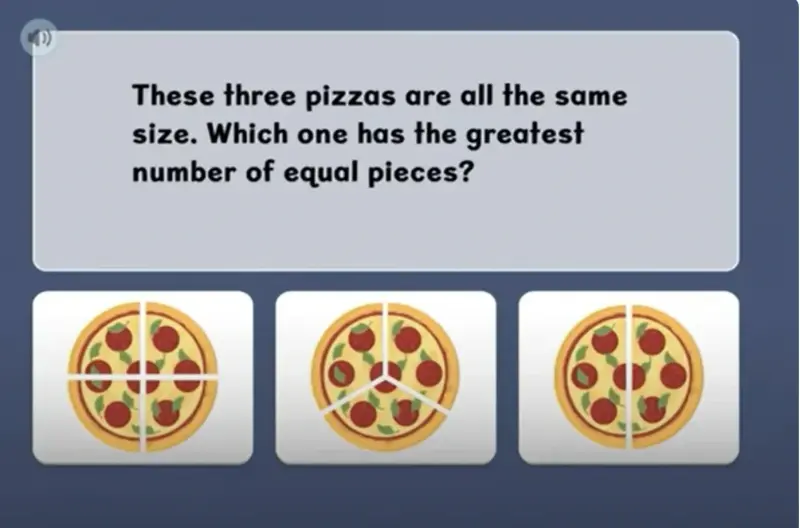
If you’re choosing an alternative to Boddle because you want clearer data, formal diagnostics, and structured progression, i-Ready is built with that purpose in mind.
How it compares to Boddle
Less playful and more formal
Heavier emphasis on assessments and diagnostics
Stronger reporting and data visibility for adults
Can feel “test-like” if used heavily
If Boddle feels fun but light on measurable progress tracking, i-Ready is almost the opposite: structured, data-driven, and highly instructional.
How it performs on our criteria
Conceptual depth: Moderate - often solid, but more skill-sequenced than exploratory.
Visual support: Present - visuals appear, but they’re not the center of the experience.
Game balance: Minimal gamification - this is closer to “instructional software.”
Pressure level: Moderate - assessments and pacing can feel higher-stakes.
Parent clarity: Strong - detailed diagnostics help adults see strengths and gaps.
Best for: School-led instruction where diagnostics and reporting matter as much as practice.
5) Prodigy (Best for higher grades)
Prodigy is one of the most well-known gamified math platforms. It blends role-playing game mechanics - battles, pets, upgrades, and quests - with curriculum-aligned math questions.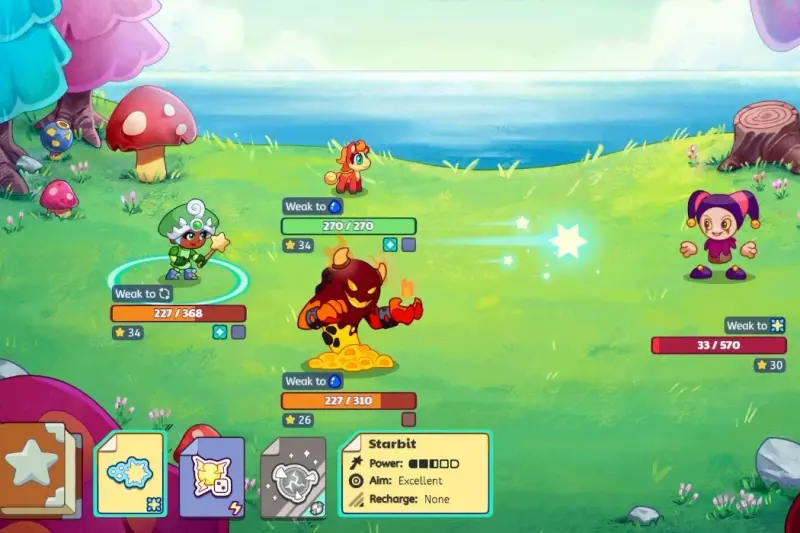
If Boddle’s game-driven format works well for your child and you’re simply looking for a similar but different experience, Prodigy offers that. The gameplay layer is even more immersive, with a stronger RPG-style structure and deeper character progression.
Like Boddle, math questions fuel the game. Students answer problems to earn power, unlock items, and move forward in battles. For some kids, that motivation is powerful. For others, the game can take center stage.
How it compares to Boddle
Even more RPG-style mechanics
Similar reward-driven progression
Strong focus on earning, leveling, and unlocking
Appeals to competitive or game-oriented learners
How it performs on our criteria
Conceptual depth: Moderate - focuses on question-answer progression rather than strategy exploration.
Visual support: Limited - primarily symbolic problems.
Game balance: Game-forward - learning powers the game loop.
Pressure level: Moderate - battle mechanics can feel competitive.
Parent clarity: Moderate - progress is visible, but less strategy-focused.
Best for: Kids who are highly motivated by immersive RPG-style gameplay.
If you're leaning toward Prodigy itself, it's worth scanning games like Prodigy worth trying first.
Final Thoughts
Boddle is fun - and for some kids, that’s exactly what they need. It can be a great place to start.
But if your goal is long-term understanding, lower pressure, or clearer progress tracking, exploring alternatives is worth it. The right math app is the one that helps math finally make sense for your child.
FAQs
Is Boddle good for math?
Boddle can help with engagement and early practice. But if you’re looking for deeper conceptual understanding, visual supports, lower pressure, or clearer progress tracking, alternatives like Monster Math, DreamBox, or ST Math may offer a better balance.
What’s the best Boddle alternative for ADHD kids?
Many parents prefer tools without timers or streak penalties. Monster Math and ST Math are often good fits because they focus on reasoning and visual structure instead of speed-based responding.
Which alternative focuses on understanding instead of speed?
Monster Math, DreamBox, and ST Math tend to emphasize reasoning and structure more than speed-based response patterns.