TL;DR: 99math is a fast-paced, competitive math platform that works well for classrooms focused on quick recall and group engagement. Monster Math is better suited for neurodivergent learners who need visual models, low-pressure practice, and conceptual understanding before speed. Research consistently shows that children with ADHD, autism, or dyscalculia benefit more from strategy-based, untimed, visually supported math instruction—which is where Monster Math stands out.
Choosing a math game for your child can feel overwhelming - especially if your child is neurodivergent. There are many different approaches apps take to "gamify" math - whether it be adding story or puzzling elements, or introducing a competitive angle to spice things up.
99math and Monster Math are two popular games that take diametrically opposite approaches to make Math fun. 99math focusses on competition, especially in the classroom - Monster Math focusses on strategy-focussed instruction and visualising math, along with puzzles and a story to keep things fun.
Both tools are popular in schools. Both are game-based. But they are built on very different learning assumptions. This comparison breaks down how each platform works, where each shines, and which learners benefit most —grounded in what research tells us about neurodivergent math learning.
What Is 99math?
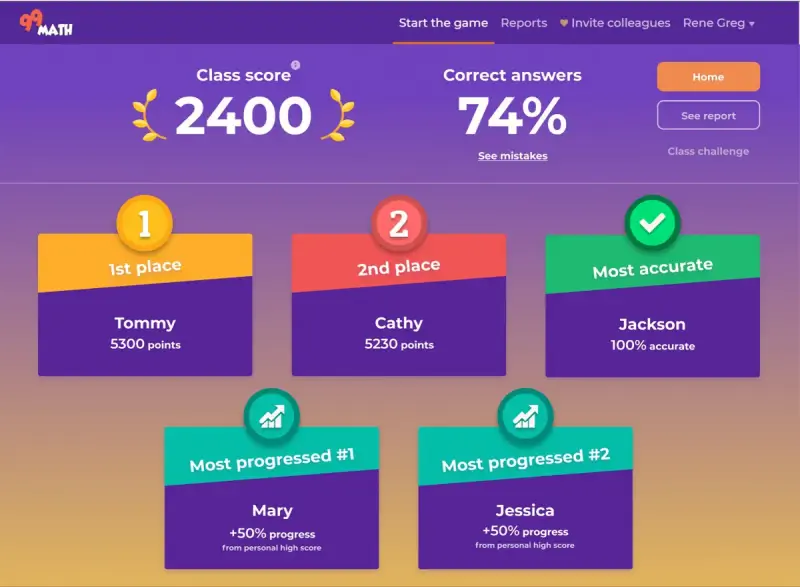
99math is a classroom-focused math platform designed around live games, quick-response questions, and friendly competition.Teachers host real-time sessions where students answer math facts under time pressure and see immediate rankings.
What 99math Does Well
- High classroom energy and engagement
- Simple setup for teachers
- Motivating for students who enjoy competition and speed
- Effective for rehearsing already-mastered math facts
Where 99math Can Be Challenging for Neurodivergent Learners
- Heavy emphasis on speed and comparison
- Limited visual or conceptual scaffolding
- Focus only on flash-card type practice. The fun mainly comes from competition.
- Can increase math anxiety for students with slower processing speed.
Research shows that time pressure disproportionately affects children with working memory challenges, often reducing accuracy and confidence even when understanding is present. Even for kids without ADHD or any other neurodivergence, putting them under time pressure before they have deeply understood number sense and how operations work puts them at a disadvantage, which can lead to Math anxiety.
What Is Monster Math?
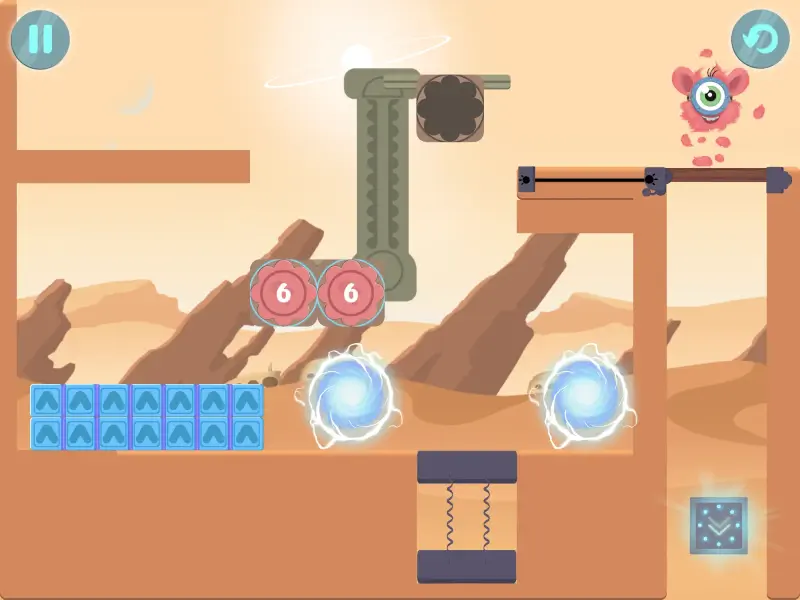
Monster Math is a research-informed math game designed around visual models, strategy instruction, and calm gameplay. Instead of racing against the clock, children explore math concepts using number lines, arrays, decompositions, and slowly moving from concrete to abstract - embedded inside a story-driven game world.
What Monster Math Does Especially Well
- No timers or competition.
- Strong use of visual representations (arrays, number lines, part–whole models)
- Explicit strategy instruction before fluency
- Supports conceptual understanding alongside practice
Decades of research on math learning show that explicit strategy instruction combined with visual models leads to more durable math learning than speed-based drill alone.This is particularly true for learners with adhd, dyscalculia and autism, but also helps any child, even neurotypical ones.
What Monster Math doesn't do well
Currently, Monster Math covers only basic Math fact fluency, from grades 1 to 3 - and it heavily focusses on visually building concepts and moving from concrete to abstract.
If you are looking for something for older kids who are already good with Math facts and need much more competitive practice, and they already enjoy flash cards - 99math might actually be better for them.
99math vs Monster Math: Feature Comparison
Feature | 99math | Monster Math |
|---|---|---|
Timers & speed | Central to gameplay | No timers |
Competition | High | No competition |
Visual math models | None | Core design feature |
Conceptual scaffolding | Limited | Explicit and progressive |
Neurodivergent-friendly design | Mixed | Strong |
What Research Says About Speed, Anxiety, and Math Learning
While timed practice can help some students, a large body of research indicates that math anxiety increases significantly under speeded conditions, particularly for students with attention regulation and sensory processing differences.
For children with dyscalculia, visual quantity representations and structured strategy use are far more effective than rote memorization. This aligns closely with Monster Math’s design philosophy.
Which One Should You Choose?
99math Is a Better Fit If:
- Your child already knows their math facts and are strong at Number sense.
- They enjoy competition and quick response games.
- They are not easily stressed by timers or rankings, or it actually motivates them.
- You are using it in classroom, maybe as a fun assessment.
Monster Math Is a Better Fit If:
- They still need to understand why and how math works, before working on speed.
- Already has some math anxiety.
- Your child has ADHD, autism, or dyscalculia.
- Timers, Speed and comparison trigger frustration or shutdown.
- You are using it at home, where it's likely the child will be playing alone.
FAQs
Is speed-based math practice bad for all kids?
No. Some children thrive on it. However, research shows that speed-based practice can be counterproductive for learners with Math anxiety, ADHD, autism, or working memory challenges.
Can Monster Math still build fluency without timers?
Yes. Studies indicate that fluency built through strategy-based repetition transfers better to long-term retention than fluency built through speed alone.
How do I get my child to be fast in Math Facts?
First, let them understand how to solve math facts in a flexible way using strategies - rather than from rote learning. For example, for something like 29 + 15 - it's far easier to solve 30 + 15 and then subtract 1, by using the nearest 10 strategy.
Once they are familiar with strategies and are actively using them by default even under time pressure, then slowly introducing some timed component can help.
Eventually they will be automatic in some math facts (such as 3 + 5 = 8) and be able to derive other math facts in their head (13 + 15 = 10 + 10 + 3 + 5 = 28) - and this efficiency leads to speed.
Do teachers use Monster Math in classrooms?
Yes. Monster Math is used both at home and in classrooms, particularly in inclusive and special education settings where calm, structured practice is essential.
References
- Caviola S, et al. (2017). Stress, Time Pressure, Strategy Selection and Math Anxiety in Mathematics: A Review of the Literature. Frontiers in Psychology
- Gersten, R., et al. (2009). Assisting students struggling with mathematics. IES Practice Guide.