TL;DR: Math-U-See is a full homeschool math curriculum built around physical manipulatives and mastery-based pacing, while Monster Math is a game-based app focused specifically on building math fact fluency and number sense. They solve different problems: Math-U-See can replace your child's entire math curriculum, Monster Math is built to sit alongside one, sharpening the fact-recall and number-sense skills that make any curriculum easier to follow.
If you're homeschooling a child, or just trying to find something that makes math feel less like a fight, you've probably come across both of these names. Math-U-See is a long-running homeschool curriculum built around hands-on manipulatives, often recommended for kids with dyscalculia or ADHD who need a slower, concrete approach. Monster Math shows up in a different conversation: parents looking for a short daily practice tool that builds number sense through play rather than worksheets.
Here's what each one actually does, where they overlap, and how to think about using them (separately or together).
What Is Math-U-See?
Math-U-See is a complete K-12 math curriculum built by Demme Learning, organized around a "Four-Step Approach": Prepare, Present/Explore, Practice, and Progress. Instead of grouping lessons by grade, Math-U-See places kids by skill level - a program built for kids who might be a year ahead in one topic and a year behind in another.
The curriculum runs across 13 levels, from Primer through Calculus, each built around the same core set of materials: an Instruction Manual, instructional videos, and a Student Workbook with tests. Most levels also include the Integer Block Kit, and a few levels add extra manipulatives on top of it - Epsilon (fractions) comes with Fraction Overlays, and Zeta and Pre-Algebra add an Algebra/Decimal Insert Kit - so the hands-on materials keep pace with each level's new concepts rather than staying static the whole way through.
Pricing runs a few different ways depending on whether you buy a physical level set, individual components, or a digital subscription. The Integer Block Kit is a one-time purchase that's reused across every level from Primer through Algebra 1, so later levels only need a new Instruction Manual and Student Workbook rather than a fresh set of blocks. You can see the full breakdown, including current bundle and subscription pricing, on Demme Learning's subscription pricing page.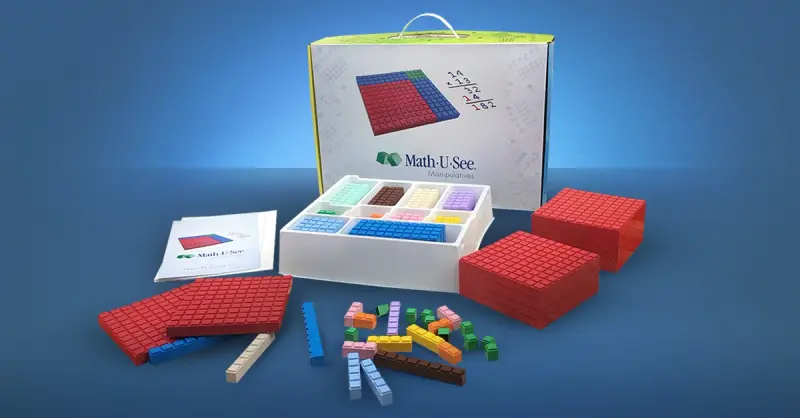
What Is Monster Math?
Monster Math is a game-based app built specifically for math fact fluency and number sense - the foundational skills of addition, subtraction, multiplication, and division that make every later math topic easier or harder depending on how automatic they are. Rather than teaching a full curriculum, it's designed to be a focused daily practice session, usually 10 to 15 minutes, wrapped in an adventure game kids want to come back to.
The app leans on the same Concrete-Representational-Abstract progression that shows up across strong dyscalculia-friendly programs, using visual manipulatives before pushing a child toward pure symbol recall. It's built with neurodivergent kids specifically in mind - low-pressure, no timed-test anxiety, wrapped in a platformer-style adventure game that's fun enough that kids want to keep playing without quite realizing they're doing math. Monster Math has a genuine free tier with a daily play cap, alongside a paid subscription that removes all daily limits.
On pricing, Monster Math is a much smaller commitment than a full curriculum. The free tier costs nothing and gives a real, permanent daily allowance rather than a time-limited trial, and the paid subscription runs about $60 a year for unlimited access.
Where They Overlap
Both programs reject the same thing: fast, symbol-only instruction that assumes a child will just absorb number relationships through repetition. Math-U-See and Monster Math both build from concrete, physical or visual representations before introducing abstract equations, both use mastery-based pacing instead of a fixed timeline, and both avoid timed drills as the primary way to build fluency. If you've read up on what actually helps kids with dyscalculia or ADHD in math, both programs show up as reasonable choices, and for the same underlying reasons.
Our own guide on choosing a math curriculum for kids with dyscalculia lists Math-U-See as one of a small number of curricula that gets the fundamentals right: number sense as the foundation, concrete manipulatives before symbols, and continuous review of past material rather than a one-and-done unit structure.
Advantages of Math-U-See
Math-U-See's biggest strength is that it's a complete curriculum. A family doesn't need to source a separate program for geometry, or fractions, or pre-algebra - the same block-based system carries a child from counting through algebra 1, which matters a lot for consistency if a child has spent years building a mental model around a specific set of manipulatives.
It's also genuinely well suited to kids who need things slowed down. There's no timed testing built into the core program, mastery checks happen before moving on rather than on a fixed calendar, and the video-based instruction means a parent doesn't have to be a math teacher to run it well. Several homeschool reviewers specifically recommend it for dyscalculic learners because it directly targets the number-sense weaknesses that sit underneath most dyscalculia-related struggles, rather than only working around them.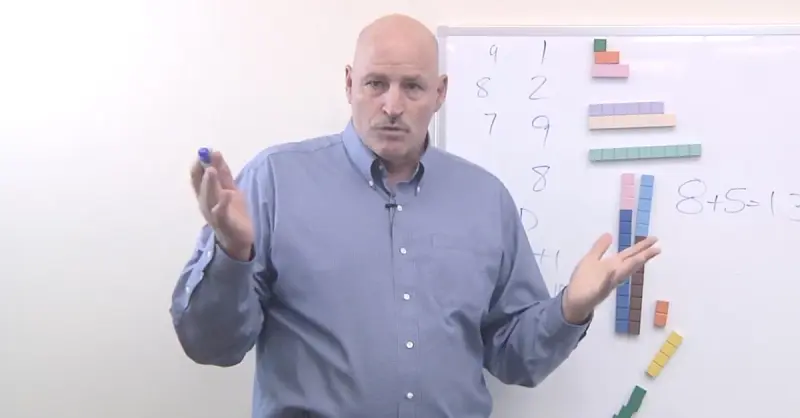
Disadvantages of Math-U-See
The upfront cost adds up. Between the Integer Block Kit, the level materials, and a subscription for video access, the first year runs high, which is a real barrier for some households, especially if a child ends up needing to try a different level or program. It also doesn't align with Common Core, which can complicate things if a child moves between homeschooling and a traditional classroom.
Because the entire system leans on one representation method - the integer blocks - kids who grasp a concept quickly can find the pacing repetitive, since the curriculum doesn't build in extension activities for advanced learners. It's also a traditional video-and-workbook format with no game mechanics or on-screen rewards, so a kid who needs play to stay motivated may find it a harder sell than something built to feel like a game from the ground up.
Advantages of Monster Math
Monster Math's advantage is focus. It doesn't try to teach geometry or algebra - it does one job, building math fact fluency and number sense, and does it in short daily sessions a child can run mostly on their own once they know the app. That makes it a natural fit alongside any full curriculum, including Math-U-See, since fact fluency built through play frees up a child's working memory for the multi-step reasoning a full curriculum eventually demands.
It's built game-first, which matters for kids who've been burned by math anxiety - there's no timed test screen, no visible "wrong" buzzer, just an adventure that happens to require solving math problems to progress. And because it's an app rather than a full curriculum purchase, the cost of entry is far lower, with a genuinely free daily-capped tier for families who want to try it before subscribing.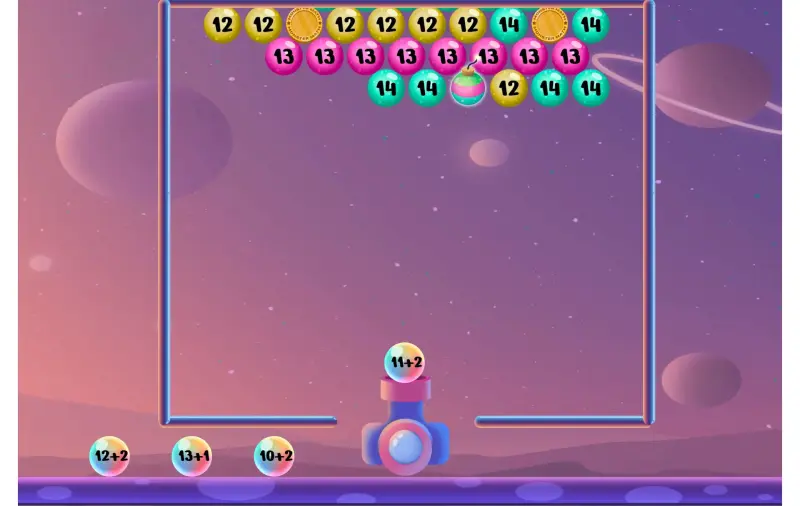
Disadvantages of Monster Math
Monster Math isn't a replacement for a full math curriculum, and it was never designed to be one - it won't teach geometry, word problems, or multi-digit long division on its own. A family still needs a core curriculum (whether that's a homeschool program like Math-U-See, or a traditional classroom) and should think of Monster Math as the fluency layer underneath it, not a standalone solution.
The app's scope also narrows as kids move into more advanced math, since fact fluency and number sense are foundational skills that matter most in the earlier grades.
Which One Should You Choose for Your Child?
These two aren't really an either/or choice for most families. If you're homeschooling and need a complete math curriculum, especially for a child with dyscalculia or ADHD who benefits from manipulatives and self-paced mastery, Math-U-See is a strong, well-regarded choice - just budget for the upfront cost and know it leans on a single teaching method (the blocks), which suits some learners better than others.
If your child is in a traditional classroom, or you already have a curriculum you're happy with, Monster Math fits in as daily practice that builds the fact fluency and number sense a full curriculum assumes but doesn't always build directly. And if you're running Math-U-See at home, pairing it with a few minutes of Monster Math a day is a reasonable way to keep fact recall sharp between formal lessons. This is because automatic recall of basic facts is exactly what frees up a child's attention for the multi-step problems.
FAQs:
1. Is Math-U-See good for kids with dyscalculia?
Yes - it's frequently recommended for dyscalculic learners because it builds every concept from physical manipulatives before introducing symbols, uses mastery-based pacing instead of a fixed timeline, and avoids timed testing, all of which line up with what research on dyscalculia-friendly instruction recommends.
2. Can Monster Math replace a full math curriculum like Math-U-See?
No. Monster Math is built specifically for math fact fluency and number sense, not for teaching a full K-12 scope and sequence. It works best as a daily practice layer alongside a complete curriculum, whether that's Math-U-See, a classroom program, or another homeschool system.
3. How much does Math-U-See cost compared to Monster Math?
A full first-year bundle, like the Primer Set (Integer Block Kit, level materials, and a year of subscription access for video lessons), runs around $200, though later levels cost less since the Integer Block Kit carries over and doesn't need to be bought again. Monster Math, by comparison, has a free daily-capped tier and a paid subscription of about $60 a year, since it's a single-purpose app rather than a full curriculum.
4. Does Math-U-See align with Common Core standards?
No, Math-U-See is not built around Common Core sequencing. Families moving between homeschooling and a traditional classroom should factor this in, since grade-level topic order may not match up exactly.
5. Is Math-U-See or Monster Math better for a child with ADHD?
Both are reasonable fits. Math-U-See's lack of timed drills and hands-on manipulatives suit kids who need to move at their own pace, while Monster Math's short, game-based sessions suit kids who need math practice to feel low-stakes and engaging rather than like a seated task. Many families use both - Math-U-See as the core curriculum, Monster Math for daily fluency practice.
6. Can Monster Math and Math-U-See be used together?
Yes, and it's a natural pairing. Math-U-See teaches the full curriculum with manipulatives and mastery pacing, while a few minutes of Monster Math a day helps keep basic fact recall automatic, which reduces the mental load a child has to spend on simple arithmetic while working through Math-U-See's more advanced lessons.