TL;DR: Khan Academy Kids is a free app for ages 2-8 covering early reading, math, and social-emotional skills, with an independent, peer-reviewed study showing real gains in pre-literacy skills. Monster Math is a paid, game-based app built specifically for K-3 math fact fluency and number sense, with a neuroinclusive design that's calm and timer-free. If you want one free app that grows with a toddler through early elementary and covers more than just math, Khan Academy Kids is the better fit. If you need a focused, genuinely fun way to build strong math facts for a K-3 child - especially one who needs a calmer, less overstimulating experience - Monster Math is built for exactly that.
These two overlap in age range more than you'd expect - Khan Academy Kids runs from age 2 to 8, and Monster Math from 5 to 9 - but they're solving different problems. One is a broad early-learning library covering reading, math, and more. The other is a single, tightly-focused game that does one thing: building math fact fluency without stress.
Overview of Khan Academy Kids
Khan Academy Kids is a free app for children ages 2-8, covering early reading, math, social-emotional learning, and physical development. It's built around books, videos, and games guided by five characters (including narrator Kodi Bear), and the curriculum was developed with learning experts at Stanford, aligned to Common Core and the Head Start Early Learning Outcomes Framework.
It's part of Khan Academy, the nonprofit best known for its K-12 platform, but Khan Academy Kids is a distinct, separate app built specifically for younger children rather than a scaled-down version of the main site. It's 100% free, with no ads and no subscriptions of any kind - a rarity for an app this polished. It also offers classroom tools for Pre-K through 2nd grade teachers, including a dashboard for assigning lessons and tracking student progress.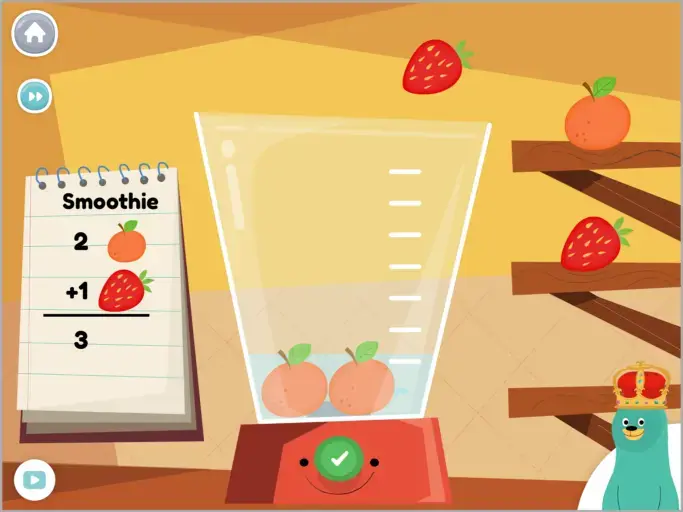
Content is organized into a library of books, videos, creative tools, and games, with math topics spanning counting, addition and subtraction, shapes, measurement, patterns, and telling time. The app is available on iOS, Android, and Amazon Fire tablets.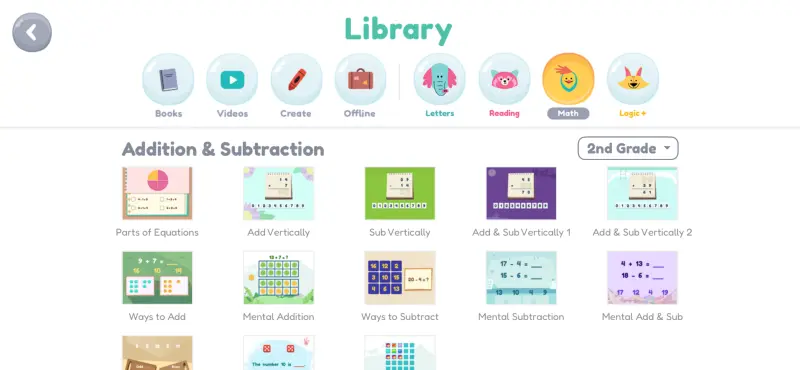
Monster Math Overview
Monster Math is a game-based Math Fact Fluency program built specifically for kids in grades K-3 (ages 5-9). Instead of videos or worksheets, math problems are woven directly into puzzle gameplay - platformer levels, a bubble shooter, number-line games etc - so a child is solving equations to progress in the game itself, not pausing gameplay to do "school work."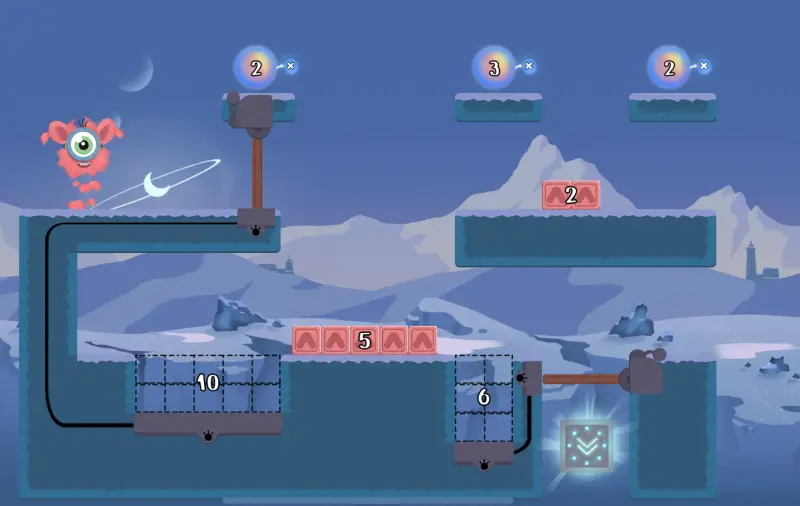
What sets it apart is its neuroinclusive design: no timers, no bright colors or jarring sounds, a calm and story-driven interface, and an explicit focus on strategies over memorization, using a concrete-representational-abstract approach. It's a free-to-start app - kids get 10 levels a day at no cost - with a $59.99/year subscription unlocking the full game, and a 7-day free trial when you upgrade.
For teachers, Monster Math is 100% free, with no credit card required. The educator dashboard lets teachers create unlimited classes, roster students by importing from Google Classroom or Clever, assign specific skills to individual students or whole classes, and track detailed progress reports on skill mastery - all built around the same Common Core-aligned content kids see at home.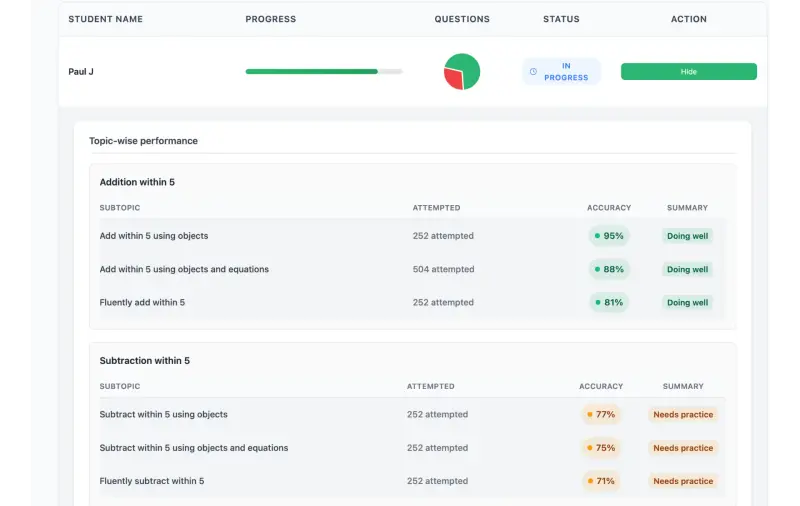
Similarities
Both are free to start, with no cost barrier to trying them out.
Both align their content to Common Core standards.
Both are used by classroom teachers as well as parents at home.
Both cover the early-elementary years, with real overlap in the ages they serve.
Both offer teachers a classroom dashboard for rostering students, assigning content, and tracking progress.
Both lean on play and game-based engagement as the core way kids learn, rather than traditional drills or worksheets.
Advantages of Khan Academy Kids
Completely free, forever - no paid tier, no ads, no subscription to eventually hit a paywall on.
Covers more than math: early reading, social-emotional learning, and physical development are all part of the same app.
Starts younger than Monster Math - useful if you want one app that carries a child from age 2 through early elementary.
Backed by an independent, peer-reviewed randomized controlled trial: low-income preschoolers who used the app at home for about 13 minutes a day over 10 weeks saw their pre-literacy scores rise from the 34th to the 47th percentile, while a comparison group barely moved.
High third-party ratings, including Common Sense Media's top marks for quality and educational value.
Disadvantages of Khan Academy Kids
Feels more like a library of separate books, videos, and games than one continuous experience - a child moves between discrete activities rather than one ongoing story or game world.
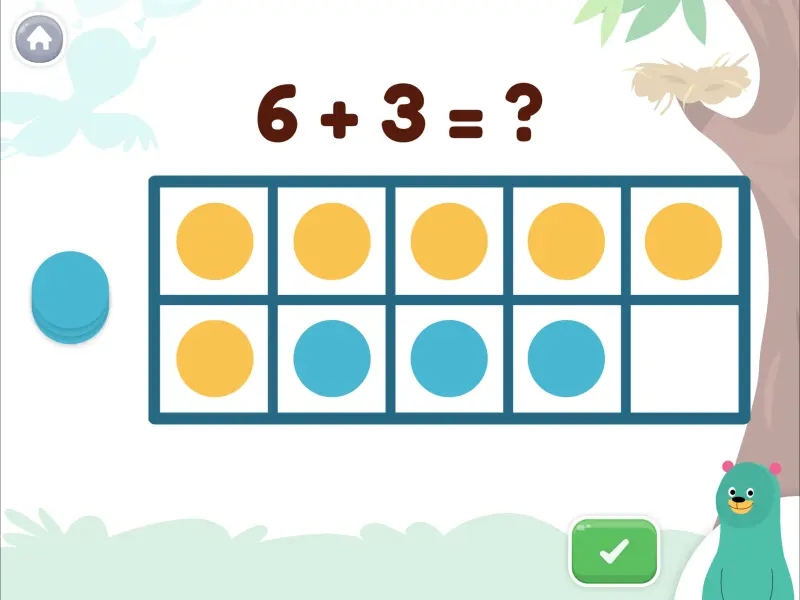
Math is one of several subjects rather than the whole point - its math content spans broad early topics like counting, shapes, addition, subtraction, and telling time, rather than a dedicated, strategy-based progression built specifically around math fact fluency the way Monster Math is.
Advantages of Monster Math
A genuine game, not a collection of separate activities - kids are playing to win, and the math is inseparable from the gameplay.
Built around neuroinclusive design principles: no timers, calm visuals, no jarring sounds, which matters for kids with ADHD, autism, or sensory sensitivities.
Strategy-first approach to math facts - kids learn ways to make problems friendlier (like making a ten) instead of just drilling flashcards.
Free for schools to use.

Disadvantages of Monster Math
Narrow scope by design - it only covers math fact fluency and number sense for grades K-3, with nothing for reading, social-emotional skills, or any subject outside math.
Costs money beyond the free daily levels - $59.99/year for full access, versus Khan Academy Kids being entirely free.
Doesn't yet have the same kind of independent, peer-reviewed efficacy research behind it - as a smaller company, it hasn't had the resources to fund that kind of study.
Starts later than Khan Academy Kids - nothing for a 2, 3, or 4 year old who isn't ready for K-3 content yet.
Which is better for your child?
If you want one free app that covers more than math - reading, social-emotional skills, and physical development alongside early numeracy - and can start as young as age 2, Khan Academy Kids is the more complete option, and it costs nothing to try for as long as you want.
If your child is in grades K-3 specifically, is building (or struggling with) math fact fluency and number sense, and needs something that feels genuinely fun rather than like practice in disguise, Monster Math is built for exactly that job - especially for kids who get overwhelmed by busy screens, time pressure, or loud feedback sounds.
The two aren't mutually exclusive, and given the age overlap, a lot of families could reasonably run both at once: Khan Academy Kids for broader early learning across subjects, and Monster Math as a focused, daily math fact fluency habit.
Ready to Try Monster Math?
Start your free trial of Monster Math today and see how game-based learning can transform your child's confidence and love for math.
Frequently Asked Questions
Is Monster Math better than Khan Academy Kids?
It depends on what you need. For a free app covering reading, math, and more for a young child, Khan Academy Kids is hard to beat. For a K-3 child who specifically needs a calm, game-based way to build math fact fluency, Monster Math is more purpose-built for that job.
Can I use Khan Academy Kids and Monster Math together?
Yes. Their age ranges overlap, but they cover different ground - Khan Academy Kids handles broader early learning across subjects, while Monster Math can be a focused, daily math fact practice habit layered on top.
Is Khan Academy Kids really completely free?
Yes. Unlike Monster Math, which has a free tier plus a paid subscription for full access, Khan Academy Kids has no paid tier, no ads, and no subscriptions at all.
Does Khan Academy Kids have research behind it?
Yes - a peer-reviewed randomized controlled trial by University of Massachusetts Amherst researchers found meaningful pre-literacy gains in preschoolers who used the app. That study focused on reading skills rather than math specifically.
What age range does each app cover?
Khan Academy Kids covers ages 2-8 (roughly Pre-K through 2nd grade). Monster Math covers grades K-3, roughly ages 5-9. The two overlap for most of the early elementary years.