If you teach kindergarten through third grade - especially children with dyslexia, dyscalculia, ADHD, autism, or math anxiety - and DreamBox Math isn't clicking with your students, you're not alone. Below, we explain why so many teachers and parents go looking for DreamBox alternatives in the first place, then walk through six options - what each one is, who it's for, what it costs, and how well it actually serves young neurodiverse children.
In this piece, we focus on what matters to families and special educators: does the tool build real understanding, does it stress kids out, and does it fit how neurodiverse children actually learn? Me and my team of learning designers have tried out all these games, tried them with kids and researched the science behind them.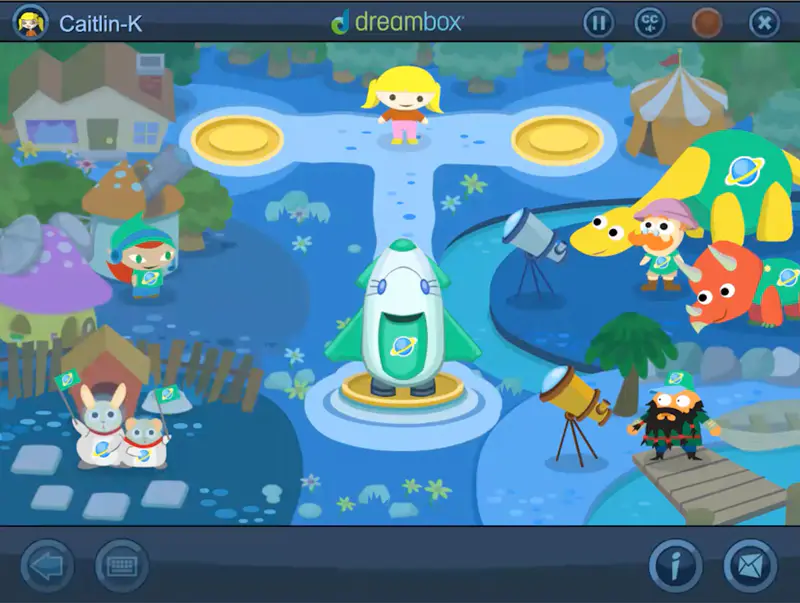
TL;DR
The most common DreamBox complaints are confusing/under-explained lessons, difficulty that swings between far-too-easy and far-too-hard, repetitiveness and boredom, cost and a school-licensing model (about $20–$30 per student per year, or roughly $7,900+ for a site license), weak customer support, and navigation that frustrates students with special needs.
Best overall DreamBox alternative for K–3 and neurodiverse learners: Monster Math — no timers, visual-first strategy instruction, free forever tier, and explicitly neuroinclusive design for kids with ADHD and autism.
The other strong picks: Funexpected Math (best for ages 3–7), Khan Academy Kids (best free option, PreK–2), Todo Math (best built-in accessibility for diverse learners), plus IXL and Prodigy as widely used — but more caveated — options.
Why Teachers and Parents Look for DreamBox Alternatives
DreamBox Learning — now branded DreamBox Math and owned by Discovery Education, which completed its acquisition of DreamBox on October 12, 2023 (backed by private-equity firm Clearlake Capital) — is one of the most widely deployed adaptive math programs in U.S. schools, described in that release as a PK-12 provider serving more than 6 million students and 600,000 educators nationwide. It has genuine strengths: an adaptive engine, virtual manipulatives, Common Core alignment, and a "Strong" rating from Evidence for ESSA. But across app-store reviews, Trustpilot, Common Sense Education, G2, and teacher forums, several recurring complaints show up again and again.
1. Lessons that don't actually teach
The most common criticism - repeated by students, parents, and teachers - is that DreamBox throws kids into problems without enough instruction.
For example one parent shares on Common Sense media that their kids want to "chuck their computer out of the window" after doing homework on Dreambox.
On the App Store, many students hate it and the average rating is 3 star.

2. Difficulty that swings too easy or too hard
Many reviewers describe an adaptive system that misfires — placing kids well above or below their level, or jumping in difficulty without scaffolding. One parent reported their child was placed at a fourth-grade level because "the instructions were so confusing," despite the child working at a sixth-grade level in that subject elsewhere.
3. Repetitiveness and boredom
A frequent refrain is that DreamBox becomes monotonous: "the same lessons everyday," a "monotonous" voice, and a dashboard that "gives you the same lessons for like a month." Older elementary students in particular reportedly tire of it.
4. It's hard for students with special needs to navigate
This is the most important issue for our audience. A teacher on G2 wrote that "for students with special needs, this program causes more frustration with navigating the technology than the actual practice of a given concept," and said they "would consider a different tool, especially for students with special needs." Multiple reviewers note the interface and instructions are confusing — a real barrier for kids who already struggle with working memory, attention, or processing.
5. Cost and the school-licensing model
DreamBox is a paid, subscription product. For families, plans run about $12.95/month for an individual and $19.95/month for a family plan (after a 14-day free trial). For schools, it's typically around $20–$30 per student per year, or a site license starting near $7,900. One reviewer flagged that costs can climb dramatically for larger deployments, and getting class rosters uploaded reportedly takes a long time compared to competitors.
6. Weak customer support
Reviewers on Trustpilot and the App Store report unresolved bugs, login problems, and a sense that complaints go unanswered.
7. Screen pressure and feedback that confuses kids
Some students report a "wrong answer" even when they believe they were right, vague hints ("move right or left"), and feedback that neither they nor their teachers understand.
None of this means DreamBox is worthless — plenty of teachers report growth, especially when it's used as a teacher-monitored intervention. But if these complaints sound familiar, here are six alternatives worth your time.
DreamBox Alternatives at a Glance
1. Monster Math (Best Overall DreamBox Alternative for K–3 and Neurodiverse Learners)

If your child or student is roughly 5 to 9 years old and building core math foundations — and DreamBox felt confusing, stressful, or repetitive — Monster Math is the alternative we'd reach for first. Made by Makkajai, it's a research-backed, game-based math fact fluency program that builds number sense through visual learning rather than rote memorization, and it's explicitly designed to be neuroinclusive.
What it is: A K–3 math app focused on number sense, addition and subtraction strategies, and early multiplication and division — taught through friendly monsters and a story-driven adventure.
Key features and strengths:
No timers and no speed-based rewards — a deliberate choice that directly addresses the time pressure that raises anxiety in young and neurodiverse learners.
Visual-before-abstract progression that mirrors the concrete–representational–abstract (CRA) method, with patterns and visual models before numerals.
Strategy focus over memorization — kids learn to make problems "friendlier" (doubles, making ten) rather than drilling facts.
A calm, distraction-free environment — no jarring sounds or overstimulating visuals, which matters for autistic and ADHD learners.
Free forever with a daily limit on levels; premium ($60/year) removes the limit.
School version that's 100% free for educators, with class management, progress tracking, skill assignment, and Google Classroom and Clever rostering.
Common Core aligned.
Weaknesses/limitations: Monster Math is intentionally focused on foundational K–3 arithmetic and number sense — it's not a full K–8 curriculum, and it doesn't offer the competitive, social, open-world gameplay some older kids crave. If you need coverage well beyond third grade, you'll outgrow it.
Platforms: iOS, Android, and web; works on phones, tablets and Chromebooks.
Neurodiverse fit: This is where Monster Math stands out from DreamBox. The calm pacing, absence of timers, visual scaffolding, and growth-mindset messaging are built around how children with dyscalculia, ADHD, and autism actually learn. Where DreamBox reviewers complained that special-needs students struggled to navigate it, Monster Math is designed to lower that barrier.
Best for: K–3 foundations, kids who get anxious with timed math, and neurodivergent learners.
Not ideal if: You want competitive multiplayer gameplay or coverage past grade 3.
2. Funexpected Math (Best for Ages 3–7 and Play-Based Learners)

Funexpected Math is a research-based early-math app for children ages 3 to 7 (PreK–2). Instead of worksheets, it offers playful, exploratory mini-games across a surprisingly broad curriculum — number sense, logic, geometry/spatial skills, and even early coding/algorithms — in 16 languages.
Key features and strengths:
A large content library — the company cites 10,000 tasks across 675 lessons and 50+ topics.
An AI "tutor" (Aika) that scaffolds learning by asking guiding questions and offering hints rather than handing over answers.
Genuinely creative, low-pressure activities with no timed questions — Common Sense Media notes it "gets creative with how the material is presented."
The company collaborates with academic researchers (it lists partners including UCL's learning-difficulties lab, the University of Chicago, and UC Berkeley).
Weaknesses/limitations: It's a subscription app, and some parents report confusing sign-up and surprise charges after the trial — read the billing terms carefully. School-age children can outgrow it, since depth tapers once foundational concepts are mastered. It's a strong complement to, not a replacement for, a full elementary curriculum.
Pricing: Free trial, then subscription — commonly listed at $10.99/month or $64.99/year (the App Store has also listed a $4.99/month unlock; pricing varies, so check current rates).
Platforms: iOS, Android; works on phones and tablets.
Neurodiverse fit: Good for younger neurodiverse children — the hands-on, low-pressure design and multilingual support help reduce math-related frustration, and the absence of time pressure suits anxious learners. Best suited to the preschool–early-K end of our audience.
Best for: Ages 3–7, early exposure, play-based learning.
Not ideal if: Your student is already working on grade 2–3 arithmetic and needs depth.
3. Khan Academy Kids (Best Free Option, PreK–2)

Khan Academy Kids is 100% free, with no ads and no subscriptions — a major advantage over DreamBox's per-student cost. Built by the nonprofit Khan Academy (with curriculum developed in collaboration with early-learning experts and aligned to the Head Start framework and Common Core), it serves children ages 2–8 (PreK through 2nd grade) across math, literacy, and social-emotional learning.
Key features and strengths:
Completely free and ad-free — removes the cost and equity concerns that dog paid platforms.
A gentle, "joyful," pressure-free design with clear spoken instructions — helpful for pre-readers and early readers.
A personalized learning path that adjusts to how the child is doing.
Whole-child content: math plus reading, executive-function, and SEL activities.
Free teacher tools, with Clever login support.
Weaknesses/limitations: It's designed for PreK–2, so third graders will need to move on to the separate (also free) Khan Academy platform. Math is one strand among many, so it's less of a dedicated, deep math program than Monster Math or DreamBox.
Pricing: Free.
Platforms: iOS, Android, Amazon; tablet-friendly.
Neurodiverse fit: Good. The calm interface, narrated guidance, mastery-based pacing, and self-directed exploration make it accessible and low-stress for many neurodiverse young learners, though it lacks the explicit dyslexia/accessibility toggles that Todo Math offers.
Best for: Budget-conscious families and classrooms, PreK–2, whole-child learning.
Not ideal if: You need dedicated, deep math content for grade 3 and up.
4. Todo Math (Best Built-In Accessibility for Diverse Learners)

Todo Math is one of the few mainstream early-math apps built with accessibility and special education baked in from the start. It covers PreK–2 math aligned to Common Core, with 41 missions plus a free-choice mode covering counting, number tracing, visual manipulatives for operations, fact fluency, time, and word problems.
Key features and strengths:
Accessibility by design: verbal and visual support, a special font for kids with dyslexia, and fine-motor options (drag-and-drop or writing answers) — features Common Sense Education highlights as supporting "different learners."
Research-based strategies and modifications for learners with special needs.
A web-based teacher dashboard (up to 30 students) for differentiation.
Stress-free, mastery-through-play structure with daily practice.
Weaknesses/limitations: Common Sense Education notes the teacher dashboard's progress data "isn't always intuitive." Like the others here, it's capped around grade 2, so it's a foundational tool rather than a long-term curriculum.
Pricing: Free version available; full access via subscription (family and school plans).
Platforms: iOS, Android, web.
Neurodiverse fit: Strong — arguably the most explicitly accommodation-friendly app on this list, with dyslexia fonts, left-handed/fine-motor modes, and multilingual support. A good fit for classrooms serving children with dyslexia, dysgraphia, or motor challenges.
Best for: PreK–2 classrooms that need built-in accommodations.
Not ideal if: You need content beyond grade 2 or highly intuitive analytics.
5. IXL (Best for Curriculum Coverage — With Important Caveats)

IXL is a subscription K–12 practice platform that the company says spans more than 17,000 PK-12 skills across math, ELA, science, social studies, and Spanish, "meeting the unique needs of over 17 million learners." Its strengths are real: granular skill breakdowns, immediate feedback, diagnostic placement, and detailed analytics that teachers and administrators love.
But for K–3 and neurodiverse learners specifically, proceed with caution. As we detail in our in-depth IXL review, the single most common complaint — repeated thousands of times across Trustpilot, Sitejabber, and Common Sense Media — is the SmartScore mechanic, particularly the "challenge zone" between 70 and 99 where a single wrong answer can erase a chunk of progress. Parents and teachers describe children crying, refusing to use it, or developing math anxiety — and that risk is amplified for kids with dyscalculia, ADHD, autism, or existing math anxiety. Consumer review sites show strikingly low ratings (Trustpilot around 1.2/5), even though the app stores (a younger, different rater pool) show ~4 stars.
Key features and strengths: Comprehensive curriculum coverage, strong analytics, accurate diagnostics, immediate feedback, won't be outgrown.
Weaknesses/limitations: Practice-only (not real instruction), repetitive drills, harsh scoring that can demotivate, bright/busy interface, and a design many reviewers call stressful for young or sensitive learners.
Pricing: About $10/month or ~$80/year for one subject (math); combo and core-subject plans cost more; extra children add a small fee.
Platforms: Web, iOS, Android.
Neurodiverse fit: Weak as a daily driver for K–3 neurodiverse kids. Best used, if at all, as a teacher-controlled, time-bounded review tool after a concept has been taught well elsewhere — and watch for tears, refusal, or shutdown.
Best for: Targeted, standards-aligned practice; older students; data-driven teachers.
Not ideal if: Your young or anxious learners are sensitive to accuracy-based scoring.
6. Prodigy Math (Best for Game-Motivated Kids — With Upsell Caveats)

Prodigy Math is a fantasy RPG designed for students in grades 1–8, where kids battle monsters and cast spells by answering math questions. Its educational content is free, and the company reports 150 million registered users in more than 150 countries, with 1 million teachers in the United States alone. We cover it in depth in our Prodigy alternatives guide.
Key features and strengths: Highly motivating game world, adaptive difficulty, no time pressure on questions, a solid free teacher dashboard with assignments and reports, and Clever integration.
Weaknesses/limitations: The biggest complaint is the premium-membership pressure — Common Sense Media notes that "leveling up is partly determined by points that are more easily earned as a paid user," and that premium perks can create inequity between classmates. Reviewers also note the math is bolted onto the adventure rather than integrated ("textbook math problems that interrupt the adventure"), and some kids focus more on cosmetics than concepts.
Pricing: Educational content free; Premium roughly $8.95–$9.95/month per child.
Platforms: Web, iOS, Android.
Neurodiverse fit: Mixed. The lack of question timers is a plus, but the battle-and-reward loop and constant upgrade prompts can distract kids who need low-distraction, strategy-focused practice. Some neurodiverse kids love it; others get pulled away from the math.
Best for: Kids motivated by game worlds, grades 2–8, review/practice.
Not ideal if: You want low-distraction, foundations-first learning.
What the Research Says About Choosing a Math App for Neurodiverse K–3 Learners
The features that separate these apps aren't just marketing — they map onto a substantial body of peer-reviewed research about how young and neurodiverse children learn math.
Game-based learning helps — modestly, and especially for younger kids. Multiple meta-analyses find positive effects of game-based and digital game-based learning on math achievement, though effect sizes are typically small to moderate. A systematic review of game-based learning in mathematics found positive impacts across both cognitive and affective outcomes — knowledge and skills as well as motivation, interest, and engagement. Notably, one meta-analysis of gamification found that primary-school learners benefit more than older students, which is directly relevant to a K–3 audience.
Adaptive learning works best when well-designed — and isn't automatically effective. A meta-analysis of AI-enabled adaptive learning systems found a medium-to-large positive effect on learning outcomes, but the lesson is that adaptivity is a tool, not a guarantee — which echoes the DreamBox complaints about an adaptive engine that sometimes misfires.
Math anxiety is real in young children and taxes working memory. Researchers have developed and validated a Math Anxiety Scale for Young Children, confirming that anxiety shows up as early as first through third grade. A separate meta-analysis shows that math anxiety consumes the working-memory resources needed for the task, undermining performance — which is exactly why timed, accuracy-punishing designs can backfire for sensitive learners.
Number sense and subitizing predict later achievement.Early numerical competence in kindergarten strongly predicts later math achievement, and subitizing — instantly recognizing small quantities — is a foundational skill. Apps that build subitizing and number sense target the right foundations.
The CRA method is evidence-based for learners with disabilities. A 2025 meta-analysis of the concrete–representational–abstract approach found a large overall effect for students with math difficulties, and an evidence-based-practice synthesis concluded that CRA qualifies as an evidence-based practice for students with learning disabilities.
Autistic and ADHD learners benefit from structured, explicit, visual instruction. A 2025 systematic review and meta-analysis of STEM learning for students with ASD found that mathematics interventions produced very high effect sizes, concluding that "explicit instruction and systematic teaching procedures" combined with "tools such as visual flowcharts and operational checklists" reduce the burden on working memory. Visually-cued, explicit instruction is repeatedly endorsed for ASD learners. For children with ADHD, research on math performance recommends "providing them with adequate time to complete tests and assignments, encouraging them to be deliberate in their computations, and promoting double-checking of their work" — all of which favor calm, untimed, scaffolded designs over fast, high-pressure drills.
The through-line: for K–3 neurodiverse learners, the best math app is calm, visual, strategy-focused, low-pressure, and explicit — which is precisely the design philosophy behind Monster Math.
How to Choose: A Quick Decision Guide
Foundations without stress, neurodiverse-first → Monster Math
Preschool/early play-based learner → Funexpected Math
Tight budget, whole-child, PreK–2 → Khan Academy Kids
Need built-in accessibility (dyslexia font, fine-motor) → Todo Math
Standards-aligned practice for older/typical learners → IXL (carefully)
Game-loving kid who needs motivation → Prodigy (mind the upsells)
For more on supporting struggling learners, see our guides on what dyscalculia is and the CRA method.
Frequently Asked Questions
What is the best DreamBox alternative for K–3 and neurodiverse learners?
For kindergarten through third grade — especially children with dyscalculia, ADHD, autism, or math anxiety — Monster Math is our top pick. It removes timers, teaches strategies visually before moving to abstract numbers, and is explicitly designed to be neuroinclusive. It also has a free-forever tier and integrates with Google Classroom and Clever.
Why do people stop using DreamBox?
The most common reasons are lessons that don't explain enough, difficulty that swings too easy or too hard, repetitiveness, cost (about $20–$30 per student per year for schools, or $12.95–$19.95/month for families), weak customer support, and navigation that frustrates students with special needs.
Is there a free alternative to DreamBox?
Yes. Khan Academy Kids is 100% free with no ads or subscriptions for PreK–2. Monster Math also offers a free-forever tier (with a daily level limit), and Prodigy's core educational content is free (though it pushes a paid membership).
Is DreamBox good for kids with dyscalculia or ADHD?
DreamBox has helped some struggling students, but multiple special educators report that its interface and under-explained lessons cause extra frustration for students with special needs. Apps designed around calm pacing, visual scaffolding, and no time pressure — like Monster Math or Todo Math — tend to fit neurodiverse K–3 learners better.
Which math app is best for math anxiety?
Choose apps without timers or harsh accuracy-based scoring. Monster Math (no timers, strategy-focused) and Khan Academy Kids (gentle, pressure-free) are good choices. Be cautious with IXL's SmartScore for anxiety-prone children.
Do these apps replace a full math curriculum?
Most are supplements, not replacements. Monster Math, Funexpected, Khan Academy Kids, and Todo Math focus on foundations (roughly PreK–3). They work best alongside teacher-led instruction, not instead of it.
References
Da, F., Ma, Y., Ma, M., Mao, J., Weng, Z., Yang, C., & Wang, T. (2025). Effects of STEM learning on students with autism spectrum disorder and students with intellectual disability: a systematic review and meta-analysis. Humanities and Social Sciences Communications, 12, 1009. https://www.nature.com/articles/s41599-025-05292-y
Karal, M. A., Riccomini, P. J., & Hughes, E. M. (2022). Effects of video modeling on addition word-problem performance of students with autism spectrum disorder. International Journal of Developmental Disabilities, 68(5), 756–765. https://pmc.ncbi.nlm.nih.gov/articles/PMC9543112/
Antonini, T. N., O'Brien, K. M., Narad, M. E., Langberg, J. M., Tamm, L., & Epstein, J. N. (2016). Neurocognitive and behavioral predictors of math performance in children with and without ADHD. Journal of Attention Disorders, 20(2), 108–118. https://pmc.ncbi.nlm.nih.gov/articles/PMC3966972/
Ebner, S., MacDonald, M. K., Grekov, P., & Aspiranti, K. B. (2025). A meta-analytic review of the concrete-representational-abstract math approach. Learning Disabilities Research & Practice, 40(1), 31–42. https://eric.ed.gov/?id=EJ1469639
Bouck, E. C., Satsangi, R., & Park, J. (2018). The concrete–representational–abstract approach for students with learning disabilities: An evidence-based practice synthesis. Remedial and Special Education, 39(4), 211–228. https://journals.sagepub.com/doi/abs/10.1177/0741932517721712
Influence of game-based learning in mathematics education on the students' cognitive and affective domain: A systematic review (2023). PubMed Central. https://pmc.ncbi.nlm.nih.gov/articles/PMC10086333/
Tokac, U., Novak, E., & Thompson, C. G. (2019). Effects of game-based learning on students' mathematics achievement: A meta-analysis. Journal of Computer Assisted Learning, 35(3), 407–420. https://onlinelibrary.wiley.com/doi/abs/10.1111/jcal.12347
Wang, X., Huang, R. T., Sommer, M., Pei, B., Shidfar, P., Rehman, M. S., Ritzhaupt, A. D., & Martin, F. (2024). The efficacy of artificial intelligence-enabled adaptive learning systems from 2010 to 2022 on learner outcomes: A meta-analysis. Journal of Educational Computing Research. https://journals.sagepub.com/doi/10.1177/07356331241240459
Examining the effectiveness of gamification as a tool promoting teaching and learning in educational settings: A meta-analysis (2023). PubMed Central. https://pmc.ncbi.nlm.nih.gov/articles/PMC10591086/
Ganley, C. M., & McGraw, A. L. (2016). The development and validation of a revised version of the Math Anxiety Scale for Young Children. Frontiers in Psychology, 7, 1181. https://pmc.ncbi.nlm.nih.gov/articles/PMC4995220/
Finell, J., et al. (2022). Working memory and its mediating role on the relationship of math anxiety and math performance: A meta-analysis. Frontiers in Psychology / PubMed Central. https://pmc.ncbi.nlm.nih.gov/articles/PMC8811497/
Jordan, N. C., et al. (2013/2014). Early numerical competencies and students with mathematics difficulty. PubMed Central. https://pmc.ncbi.nlm.nih.gov/articles/PMC3756513/